


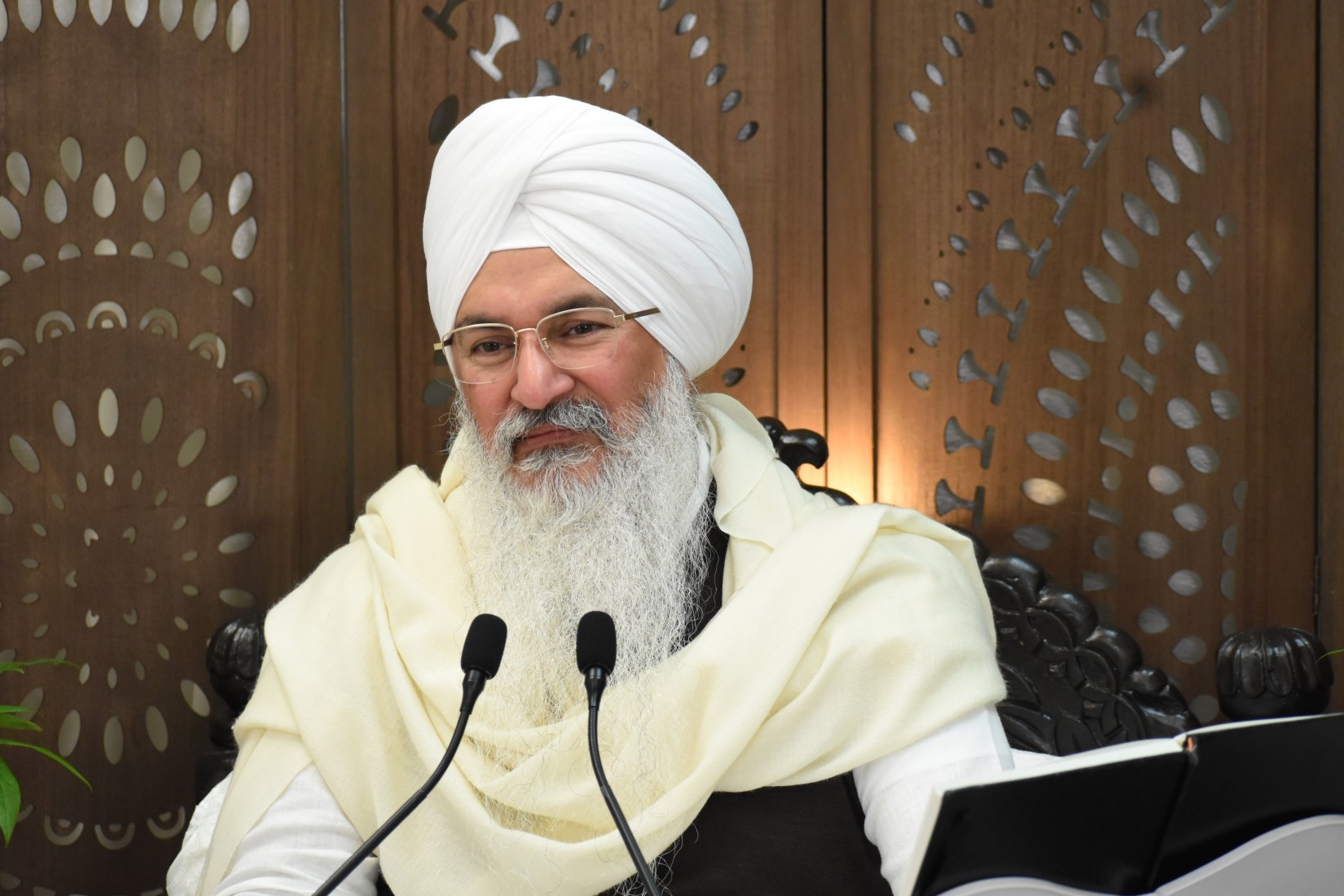
What is true happiness, and where do we find it? Is meditation more than breathing exercises? Can suffering become a doorway to awakening, and does ego stand in the way of spiritual growth? In a wide-ranging conversation on Zoom with presenter and podcast host Sanya Raj, Sant Gobind Ram Ji, founder of the Nadar Gobind Foundation (NGF) based in the Bay Area of California, explores these questions and more.
A spiritual leader and humanitarian, Sant Gobind Ram Ji’s teachings transcend religion, culture, and nationality. His message centers on self-awareness, compassion, selfless service, and the need to look within rather than constantly seek fulfillment in the outside world. Drawing on spiritual wisdom and everyday examples, he speaks about the search for happiness, the power of meditation, the dangers of ego, karma, and seva, and the importance of recognizing both our strengths and weaknesses.
He also turns his attention to young people navigating a world of technology, social pressures, and constant distraction. Rather than blaming the younger generation, he calls on families and society to examine their own role and encourages young people to “make themselves more important” by stepping back, reflecting, and working on themselves.
From the depths of the ocean to the lotus rising from the mud, Sant Gobind Ram Ji uses powerful spiritual metaphors to make a simple point: “The deeper we go within, the more we discover who we truly are—and the greater our responsibility to use that strength without ego.”
Conducting the interview for A Lotus In The Mud, Sweden-based presenter and podcast host Sanya Raj brings a contemporary perspective to the conversation about spirituality.
Excerpts from the interview:
Sanya Raj: Many people spend their lives searching for happiness outside themselves. Why do you believe the human soul looks for something deeper?
Sant Gobind Ram Ji: Sanya, first we need to understand what we mean by happiness, because it means different things to different people. A materialistic person may find happiness in material things, while someone else may find it in drugs, planning, listening to others, or even fooling people. So, what kind of happiness are we really talking about?
The happiness we usually experience is connected to the body and the outer world. But the mind and soul have different needs. The body’s food is tasty things we eat, while the mind’s food is our thoughts. The soul’s food is different altogether. Until we understand who we truly are, we will remain confused about what happiness really means.

True inner peace comes from finding satisfaction within, understanding our limitations, and continuously working on our negative habits and emotions. Meditation can help because it takes us inward and allows us to work on ourselves. So, peace comes not simply from breathing exercises but from going deeper within and transforming ourselves.
~ Sant Gobind Ram Ji
So, how should we understand happiness from the soul’s point of view?
Sant Gobind Ram Ji: If we want to understand happiness from the soul’s point of view, we first need to realize who we truly are. If we identify ourselves only as the body, we will not find happiness for the soul. The moment we realize, “I am not the body; I am the soul,” our thinking and our desires begin to change. We start looking within ourselves for happiness rather than seeking it outside. The deeper we go within, the more we discover the peace and happiness that already exists inside us. So, the first step towards a soul’s happiness is realizing who we are and then going deeper within to find our true self.
Was there a turning point in your life that changed your understanding of happiness?
Sant Gobind Ram Ji: The turning point came when I realized that I am not just the body and that the real happiness I was seeking was not in the outer world but within me. I started going deeper inside, talking to myself and becoming my own judge.
Instead of judging others or finding their mistakes, I look at my own mistakes and ask myself how I can improve every day. I have realized that being good is not the end. After good, there is always better.
We should never try to become the “best,” because the moment we think we are the best, ego takes over. Look at Ravana, Kansa, or Hiranyakashipu—they were powerful and accomplished, but ego led them in the wrong direction. So I say, “I am good, but I want to be better.” That realization made me start working on myself and looking within.
Meditation is becoming increasingly popular around the world. What do you think meditation truly means for inner awakening?
Sant Gobind Ram Ji: These days, meditation is often reduced to breathing exercises or pranayama. But meditation is much more than that. It is about sitting alone, away from the outer world, and spending time only with yourself.
You don’t need chanting, special techniques, or even guidance. Sit comfortably, relax, and allow your thoughts to come without suppressing them. Don’t rush or try to control the process. As you sit quietly, you gradually begin to enjoy that stillness, observe your thoughts, and go deeper within yourself. Whether it is for five minutes or an hour, that time spent with yourself is meditation.

Can everyone experience inner peace through meditation?
Sant Gobind Ram Ji: When we talk about peace, we first need to understand what peace really means. For someone deeply involved in the materialistic world, alcohol may give a temporary sense of peace; for someone deprived of sleep, a good sleep can feel like peace. But when we talk about inner peace through meditation, it is more than breathing exercises.
True inner peace comes from finding satisfaction within, understanding our limitations, and continuously working on our negative habits and emotions. Meditation can help because it takes us inward and allows us to work on ourselves. So, peace comes not simply from breathing but from going deeper within and transforming ourselves.
We live in a busy world full of stress, anxiety, and constant distractions. So how can someone remain spiritually centered amid all this?
Sant Gobind Ram Ji: When we talk about stress and anxiety, we need to understand that no aliens or outsiders brought them into this world—we human beings created and allowed them to grow. There was a time when elders stopped arguments and negative behavior in families, and society did the same. Today, we have accepted these things by saying, “What can we do? It happens.”
That is where the lesson of the lotus in the mud comes in. The lotus grows through the mud but never considers itself a part of it. It struggles, rises above it, and blossoms. Similarly, if we want to overcome stress and anxiety, we need to work on ourselves rather than trying to change others.
There are countless speakers and online messages, but unless we apply them in our own lives, nothing changes. Let the world be whatever it is; I want to be the lotus. Stop seeking comfort and approval from society, step out of our comfort zone, and keep improving ourselves.
You know, the voltage in our body has increased because we have lost our connection with the earth. We wear slippers, shoes, and socks; we rarely walk barefoot or touch greenery. We are also isolated, communicating through phones rather than meeting people, and forgetting the importance of our body and our own selves.
The Vedas say, “Aham Brahmasmi”—I am the Almighty. If we ourselves carry that divine potential, why are we struggling the way we do? As human beings, we have the power to be either a divine or a destructive force. No one else decides this for us.
We need to understand our own importance and rise from the mud to shine like a lotus.
Very nicely put. Many spiritual traditions speak about the ego. What is the ego, and how can we recognize when it is guiding our lives and not the higher self?
Sant Gobind Ram Ji: Ego is when we know our mistakes or weaknesses but refuse to accept them. Even if others point them out, we remain in denial and cannot say, “I’m sorry.” The moment we recognize, “Here I am wrong,” and begin working on ourselves, we start defeating the ego. True change begins with self-realization and accepting our weaknesses.
There is good energy and bad energy, and good karma and bad karma. We already know from our scriptures, society, and even the laws of the country what is considered right and wrong. Spiritually too, we have the distinction of dev (god) and rakshas (demon)—the dev does what is good for society, humanity, and nature, while the rakshas is a destructive force.
Sit alone and observe yourself. Think about someone you know or observe people in a gathering. What thoughts arise within you—good or bad? You don’t have to tell anyone; you have to be honest with yourself.
Satsang with Sant ji in NJ and NY coming up:
- Oct 3, 4 pm, 400 US 130, East Windsor, NJ
- Oct 4, 6 pm, 255 W Old Country Rd, Hicksville, NY
For the 2nd part of the exclusive interview with Sant Gobind Ram Ji, go to:
Visionary, inspirational speaker, and founder of the Nadar Gobind Foundation

Sant Gobind Ram Ji (also known as Sant Ji) is a spiritual master, world-renowned visionary, inspirational speaker, and founder of the Nadar Gobind Foundation based in California. Sant Ji has shared simple and practical steps to support the journey toward spiritual awakening and inner transformation.
Sant Gobind Ram Ji has dedicated his life to awakening the human spirit and sharing the values of love, compassion, harmony, and inner transformation. His wisdom encourages individuals to look beyond the external world and discover the profound peace and awareness that already exists within.
With consistent practice, these steps can guide us toward greater clarity, inner peace, self-realization, and a more meaningful way of living.
For more info: https://nadargobind.org


Leave a Reply