


There is an overwhelming amount of information circulating globally on health foods and nutrition. While abundance should ideally empower people to make informed choices, it often does the opposite—leaving individuals confused, fatigued, and unsure of whom or what to trust. Diet trends rise and fall, superfoods are celebrated and discarded, and advice changes faster than habits can keep up.
For a significant proportion of the population, the ability to make informed dietary choices remains limited—due to lack of awareness, contradictory messaging, or deeper socioeconomic and cultural barriers. As a result, both those exposed to excess information and those with limited access to it struggle to navigate the modern nutrition landscape.
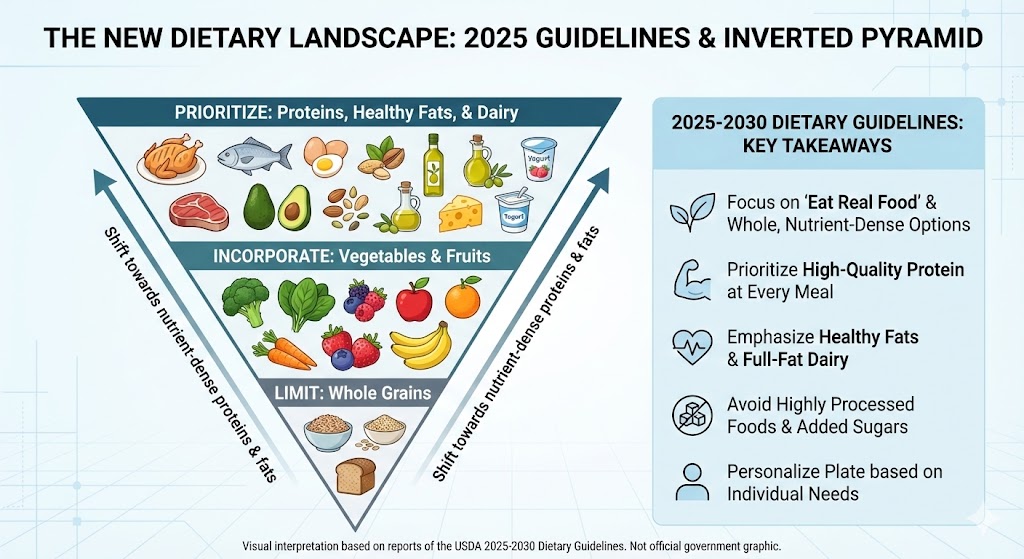
On 7 January 2026, the U.S. Department of Health and Human Services (HHS), in collaboration with the U.S. Department of Agriculture (USDA), released the 2025–2030 Dietary Guidelines for Americans (DGA). Though intended primarily for an American audience, these have global relevance, shaping food policy, public health programs, and research priorities.
What stands out in this edition is not merely the foods it recommends, but a broader acknowledgement that dietary patterns, food quality, and long-term nourishment matter more than calorie counts. Embedded within the guidelines is a quiet admission of a modern paradox: societies surrounded by food abundance and information continue to struggle with chronic disease and nutritional inadequacy. This paradox is not confined to the West.
A shared global reality
Evidence from India mirrors this contradiction. Findings published in Nature Medicine from a large nationwide study conducted by the Indian Council of Medical Research (ICMR) and the National Institute of Nutrition (NIN) reveal that over half of India’s disease burden is linked to unhealthy diets. Alarmingly, early metabolic abnormalities are now seen not only among overweight adults but also in children who are undernourished or of normal weight.
Despite stark differences in food cultures and economic conditions, both the DGA and ICMR–NIN recommendations point to the same underlying truth: eating enough—or even eating ‘right’ by conventional definitions—does not automatically ensure nourishment.
To understand why, we must revisit the distinction between food intake and real nutrition.
Why quality matters more than quantity
Modern food environments encourage excess—frequent snacking, higher protein targets, and calorie-dense convenience foods. When intake exceeds digestive capacity, digestion becomes inefficient. Nutrition is not determined by how much we eat, but by how effectively the body digests, absorbs, and assimilates what it receives.
Chronic overeating weakens digestive efficiency, disrupts gut integrity, alters the microbiome responsible for nutrient synthesis and absorption, and creates metabolic inefficiencies. This leads to deficiencies even in the presence of abundance. The result is a body that is overfed but undernourished—adequate in calories, yet lacking essential micronutrients, phytonutrients, and vitamins. Therefore, fatigued and low-energy.
For nutrients to benefit the body, they must be released from food during digestion, absorbed through the intestinal lining, and transported efficiently to cells. On paper, diets may appear balanced, but nourishment never fully arrives at the cellular level. The missing link is absorption.

The protective power of whole plant foods
Nature packages minerals intelligently. Whole plant foods—grains, legumes, vegetables, fruits, nuts, seeds, and tubers—offer nutrition in a form the human body is evolutionarily adapted to process: complex, fiber-rich, and accompanied by thousands of bioactive compounds that support digestion and metabolic balance.
One of the most cited pieces of evidence for this is The China Study, a comprehensive epidemiological investigation examining dietary patterns across rural China. Communities consuming simple, predominantly plant-based diets showed dramatically lower rates of heart disease, diabetes, obesity, and certain cancers—not because of supplementation, but because of modest, traditional eating habits.
Both American and Indian dietary guidelines echo this principle: shift away from ultra-processed foods and return to whole dietary patterns. Dietary fiber feeds beneficial gut bacteria, strengthens intestinal integrity, moderates glucose absorption, and creates internal conditions for better nutrient utilization. Whole plant foods nourish without overwhelming.
In fresh form, they also offer something often overlooked in nutritional discourse: vitality. It is not the same as caloric energy. Energy behaves like a fizz—immediate and transient. Vitality resembles a perennial stream—steady, sustaining, and deeply nourishing. Just as food is often confused with nutrition, calories are frequently mistaken for nourishment. One fuels activity; the other sustains life itself.
Bioavailability: Making nutrition available
Not all nutrients present in food are automatically available to the body. Many plant foods contain naturally occurring compounds—often called “anti-nutrients”—such as phytates and oxalates. While these compounds play protective roles in plants and may even offer health benefits, they can reduce mineral absorption if not addressed appropriately.
Traditional food practices evolved precisely to enhance bioavailability. Soaking and sprouting legumes and grains improves mineral absorption and protein digestibility; fermentation increases B-vitamin availability and introduces beneficial bacteria; gentle cooking breaks down plant cell walls, making nutrients more accessible.
The raw-versus-cooked debate often misses this nuance. Some nutrients are best consumed raw; others become more bioavailable after cooking. Partial or wholesome cooking, rather than excessive processing or prolonged high heat, often offers the optimal balance.
Similarly, in traditional diets, spices were never mere flavoring agents. Ginger, cumin, coriander, turmeric, black pepper, and others stimulate digestive secretions, enhance enzyme activity, reduce bloating, and improve assimilation. Spices bridge the gap between what we eat and what we absorb.
The myth of ‘more is better’
Protein has become the modern nutritional obsession. Excessive protein—especially from isolated or heavily processed sources—places unnecessary strain on digestion, the liver, and the kidneys. More protein does not automatically translate into better health.
Plant-based diets provide adequate protein when foods are sensibly combined. Traditional pairings of grains and legumes offer complementary amino acid profiles, while fermentation and proper cooking enhance digestibility. This approach delivers nourishment without overburdening the system.
Carbohydrates, too, have been unfairly vilified. When consumed in their intact forms—whole grains, root vegetables, and legumes—they provide sustained energy, fiber, and essential micronutrients. Fats from nuts, seeds, and plant oils support nutrient absorption and metabolic health when used judiciously.
Guiding principle: not restriction, but appropriateness.
Vegetarian diet, longevity, and lived traditions
A well-planned vegetarian diet can meet nutritional needs across the lifespan when supported by absorption-enhancing practices. Iron absorption improves when paired with vitamin-C-rich foods; zinc and calcium become more available through soaking and fermentation; omega-3s are found in flax-seeds, walnuts, and leafy greens.
Vitamin B-12 requires special attention. Since reliable plant sources are limited, supplementation or fortified foods are prudent. Recognizing this strengthens, rather than weakens, the case for plant-based nutrition.
Longevity studies—from rural Indian communities to the world’s Blue Zones—reveal consistent patterns: plant-based diets, modest portions, minimal processing, following biorhythms, and respect for digestion. Health in these cultures is an outcome of alignment.
From information to nourishment
It is worth a pause when vastly different cultures begin to echo the same concerns. Both American and Indian frameworks suggest that chronic disease and nutritional deficiency stem not only from poor food choices but also from a deeper disconnect between eating and nourishment.
Nutrition does not manifest on the plate. It manifests in the body through digestion, absorption, assimilation, and balance. Thus, the way to health lies not in eating more, supplementing more, or knowing more, but in eating with restraint, choosing live food thoughtfully prepared, and received by a system capable of using it.
In recognizing the distinction between eating and nourishing, we may rediscover a quieter, wiser approach to health—one rooted not in excess or anxiety, but in balance, awareness, and respect for the body’s innate intelligence.

Leave a Reply