


‘Protein’ has become a new shorthand for healthy eating. But can an overdose of a good thing become a problem?
Some gulp down a dozen eggs every day. Others sip protein shakes from morning to evening, while some pile their plates with chicken. In the race for weight loss, muscle and a chiselled body, protein has become the star of modern nutrition.
Why protein matters
“Protein is an important part of our diet. It is made up of 9 essential amino acids. Along with the growth of our body, protein also does the work of repairing and regulating our systems,” says clinical dietitian Anushree Sinha.
Protein is indeed an essential macronutrient and a building block for muscles, bones, skin, hair, and virtually every tissue in the body. It also helps rebuild muscles and contributes to satiety, making us feel fuller after meals.
“Animal foods such as milk, curd, paneer, cheese, meat, fish, and eggs generally provide all nine essential amino acids and are considered complete proteins,” says Anushree.
“Protein obtained from plants contains only 2-4 amino acids. Hence, plant proteins—such as kidney beans, chickpeas, lentils, and pulses—are called incomplete proteins. However, soybean is an exception because it has 9 amino acids,” she explains.
Some plant proteins may be low in one or more essential amino acids, but that doesn’t make them inferior protein sources. Pulses, grains, nuts, seeds, and soy can all contribute to protein intake, and combining different plant foods can improve the overall amino acid profile.
ICMR-NIN—India’s premier nutrition research institution—specifically recommends combining cereals and pulses for high-quality protein.
Why your high-protein diet needs fiber
The problem begins when protein becomes the center of the diet while everything else is pushed aside.
“Protein sources like meat and eggs have no fiber. When we eat only these proteins, we need fiber, such as salad, green leafy vegetables, etc. to keep our stomach and bowels working smoothly. Plant protein does not come under this rule because it already has enough fiber,” says Anushree.
There is no single ideal protein-to-fiber ratio for everyone, says Meenakshi Aggarwal, Clinical Dietitian, MAIINS, Marengo Asia Hospitals, Gurugram. Protein needs vary with age, body size, activity, pregnancy, illness, and recovery, while fiber needs depend on the overall diet and individual tolerance.
“For a healthy adult, the basic requirement is around 0.8–0.83 g/kg body weight/day. For example, a 60-kg healthy adult would need roughly 50g of protein a day to meet the basic requirement. Requirements can be higher in people who are very physically active, older adults, during recovery from illness, pregnancy, or when there is a specific clinical indication,” says Meenakshi.
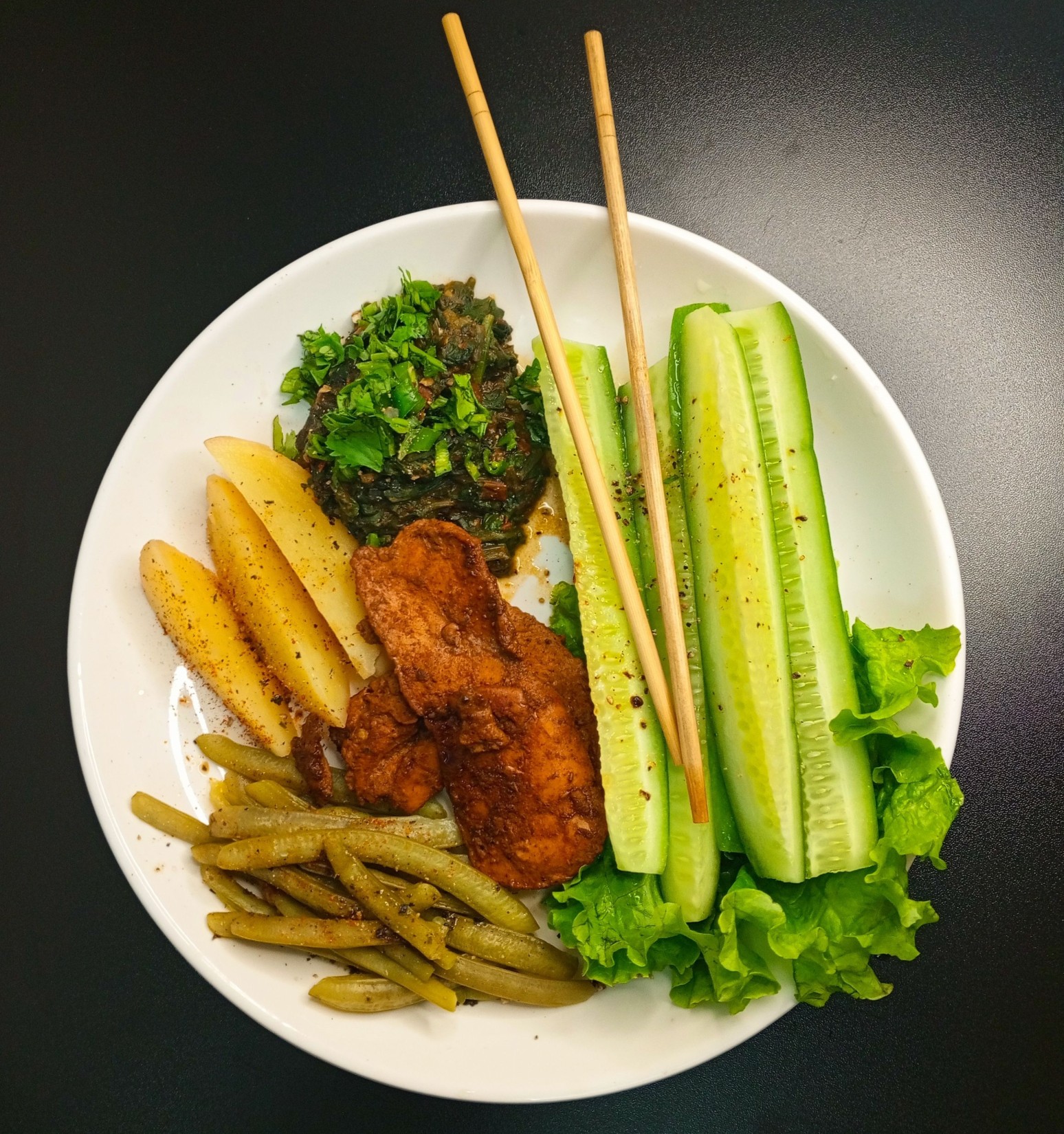
Her advice is simple. “A practical balanced plate would include a protein source, vegetables/fruit, a whole-grain or other minimally processed carbohydrate source + appropriate healthy fats.”
Side effects of high protein and low fiber intake
This is where the protein obsession can become problematic. When people add more meat, eggs, or protein shakes, they may end up eating less of the foods that naturally provide fiber—whole grains, pulses, vegetables, fruits, nuts, and seeds.
“When people increase protein, they often reduce the foods that naturally provide fiber. The result can be a diet that is high in protein but relatively poor in fiber,” says Meenakshi.
That can mean constipation, reduced stool bulk, and poorer gut health. But fiber does much more than keep digestion moving. WHO recommends at least 25 grams of naturally occurring dietary fiber a day for everyone over 10.
Plant foods generally provide both soluble and insoluble fiber. Soluble fiber can help manage cholesterol and blood sugar, while insoluble fiber adds bulk to stool and supports regular bowel movements. Fiber also feeds beneficial gut bacteria and supports the production of short-chain fatty acids.
“While animal protein is fiber-free, plant protein is fiber-rich. This fiber is not digested, nor does its form change. This fiber helps remove impurities stuck in our intestines and regulates the digestive system,” says Anushree.
Animal protein vs. plant protein: What is the difference?
A New York Times article highlights why lentils and other plant-based proteins deserve more attention. Half a cup of cooked lentils provides about 9 grams of protein and roughly 8 grams of fiber, while also supplying iron, potassium, magnesium, zinc, and B vitamins such as folate. Lentils also contain polyphenols associated with antioxidant and anti-inflammatory activity.
“Pulses are particularly useful because they contribute both protein and fiber,” says Meenakshi.
Their combination of protein and fiber can slow digestion and increase satiety, while the fiber supports gut health. Unlike many animal-based protein foods, pulses are naturally low in saturated fat.

Can too much protein damage your kidneys?
Not necessarily.
“For a healthy person, a higher-protein diet does not automatically mean kidney or liver damage. However, consistently eating substantially more protein than required can become problematic depending on how the extra protein is being consumed and what it replaces,” says Meenakshi.
“If someone replaces vegetables, fruits, whole grains, and pulses with large amounts of meat, protein shakes, or highly processed protein products, the problem is not simply ‘too much protein’; it is that the overall quality and balance of the diet deteriorates,” she adds.
The kidney question is particularly relevant for people with existing kidney disease.
“Protein increases renal workload and glomerular filtration, but this physiological response must not be confused with kidney damage in healthy individuals. People with chronic kidney disease or reduced renal function are different and may require individualized protein targets under medical supervision,” Meenakshi explains.
Gut health is another consideration.
According to Meenakshi, “A high-protein, low-fiber pattern—particularly when much of the protein comes from animal sources—can alter the gut microbial environment and increase protein fermentation. Fiber, on the other hand, provides substrate for beneficial microbial fermentation and short-chain fatty acid production.”
“So, protein needs to be adequate, not excessive, and the foods accompanying that protein matter just as much.”
Why the sudden protein fixation?
Protein has always been an important part of a balanced diet. But its recent transformation into a wellness obsession has been fuelled by fitness culture, social media influencers, food marketing, and the growing popularity of weight-loss drugs.
A Boston University article featuring nutrition expert Joan Salge Blake notes that protein has moved beyond its traditional association with bodybuilders. The rise of appetite-suppressing medications such as semaglutide has also made adequate protein intake a concern for some users, who may struggle to eat enough because of reduced appetite.
“So this is not just a fad; there really are subsets of people now that have to make sure they’re getting enough protein and that they’re getting enough of it throughout the day,” Salge Blake says.
For most people without specific health or dietary needs, however, protein deficiency is not something to obsess over. Meat, eggs, grains, seafood, beans, tofu, yogurt, and milk all provide protein.
The problem, therefore, is not protein itself. It is the belief that more protein automatically means better health.

Best Indian food combinations for protein and fiber
Traditional Indian diets offer plenty of protein-fiber combinations.
“Good examples include dal with roti, kidney beans/chickpeas with rice, khichdi (lentil and rice with vegetables), sattu (roasted gram flour) with vegetables or curd, sprouts with vegetables, and curd/paneer (cottage cheese) with whole grains and vegetables. Nuts and seeds can also contribute protein, fiber, and healthy fats,” says Meenakshi.
ICMR-NIN’s Dietary Guidelines for Indians emphasize variety and a balanced diet, including vegetables, whole grains, pulses or beans, nuts or seeds, fruits, and curd. They also recommend pairing cereals or millets with pulses or beans for good-quality protein and fiber.
Perhaps the answer to the protein obsession is not to eat less protein but to stop treating it as the whole story. A healthy body needs protein, but it also needs fiber, carbohydrates, healthy fats, vitamins, minerals, and a variety of foods. The goal is not to put protein on a pedestal but to put balance back on the plate.

Leave a Reply