


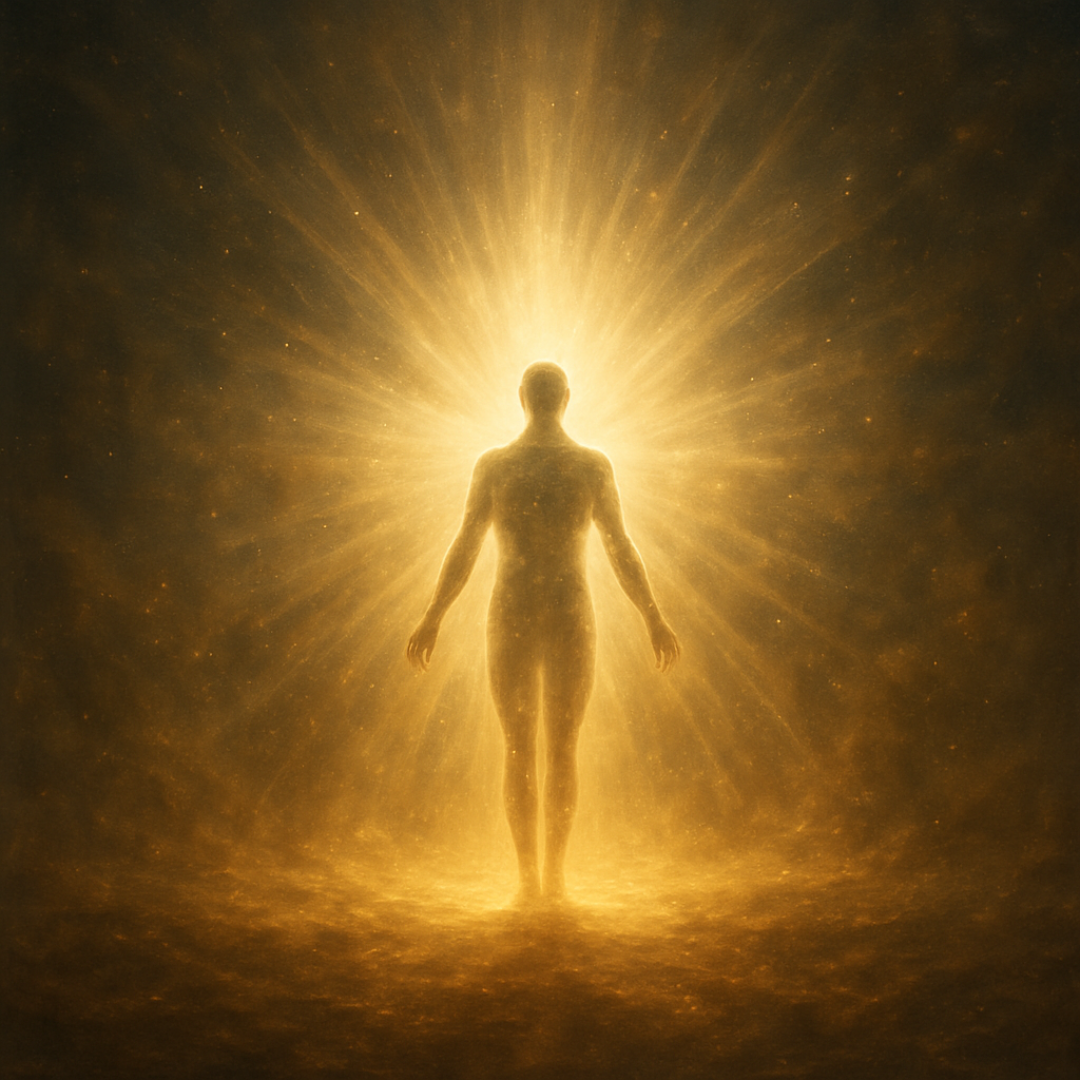
Near Near-death experiences (NDEs) have been reported across cultures for centuries, yet only recently have they been studied with seriousness. Defined as profound, often transformative episodes occurring close to death or in extreme danger, NDEs are far more common than most people realize: about one in 20 individuals report having had one, and nearly a fifth of those revived after cardiac arrest, trauma, coma, or major surgery describe similar experiences. These accounts frequently include out-of-body perception, moving toward light, encounters with spiritual beings or deceased relatives, panoramic life reviews, and a deep sense of peace or unity. Many experiencers return with lasting changes like reduced fear of death, greater compassion, heightened intuition, and a profound shift toward spirituality.
Among the world’s leading voices on this phenomenon is PMH Atwater, a pioneering researcher, field investigator, and three-time experiencer herself. Over the past 47 years, she has studied more than 4,000 cases, authored more than 20 books, and is widely regarded as one of the top four global authorities on NDEs. Beginning her research in 1978 after her own multiple episodes, Atwater has used rigorous, investigative methods to document both adult and child experiencers, track long-term aftereffects, and build one of the most comprehensive bodies of work in the field. A prayer chaplain, counsellor, and international speaker, she continues to shape the global conversation through her books, interviews, and landmark encyclopaedic volume, The Big Book of Near-Death Experiences.
In this email interview with Ashish Virmani for ALotusInTheMud.com, from her home in Charlottesville, Virginia, Atwater discusses some of the most fundamental issues that NDE researchers contend with in the course of their work, whether the subject is consciousness or pushbacks from the medical world.

Ashish Virmani: From a scientific point of view, how believable are NDEs?
PMH Atwater: The credibility is immense, precisely because NDEs shatter the rules of conventional medicine and physiology. Medicine warns that ‘without sufficient oxygen, the brain can be permanently damaged in three to five minutes.’ Yet my data show that individuals who experienced oxygen deprivation returned with a cognitive improvement. None suffered ill effects, and many became smarter and more creative.
We must move beyond the belief that the old scientific method alone is adequate; it falls short because of the number of variables. Instead, we must focus on what is undeniable: the NDE is a powerful, complex dynamic capable of fostering psychological transformation and even physiological changes equal to species-level evolution.
If we are serious, we must ground our investigation in measurable consequences and ask: What practical applications do NDEs have? How can NDEs and their aftereffects help dying or comatose patients, grieving families, and suicidal individuals? And how can the beneficial effects of NDEs be safely replicated?
Do you see a connection between NDEs and spirituality?
PMH Atwater: Yes, the connection is everything. It is the core of the experience—a deep, personal knowing that replaces outdated religious dogma.
Experiencers shift toward a spiritual approach grounded in a personal relationship with God, rather than in imposed beliefs. Many describe the Light flooding consciousness with ultimate knowledge: “I knew…”
The truth they encounter is unified love, seen in what I call the Sourceplace: not the God of holy writ, but an all-encompassing Oneness that breathes through skin, bark, wings, stars, rivers, dreams…and even the mustard on your hotdog. This revelation awakens a sense of love and unity with everyone and everything.
Aftereffects confirm this shift: people return empowered, more forgiving, and ready to make positive life changes. The message is clear: each person has a purpose.
After a lifetime of research, what aspect of NDEs do you find most revealing?
PMH Atwater: Two contrasting experiences: the immediate, total comprehension of existence during the event and the profound discomfort of re-entry into the body.
In the Light, knowledge is instantaneous. The universe, once chaotic, snaps into coherence. You realize you are not a victim of circumstance—you simply ignored the responsibility of choice.
Then comes the agony of return. Experiencers say, “It felt horrible to be squeezed back into a body that felt so heavy, like a cement cast.” You feel disoriented, like landing on a foreign planet. This contrast—absolute knowledge versus physical limitation—reshapes everything that follows.
How do you view consciousness—as a product of physiology or something larger?
PMH Atwater: Consciousness is absolutely larger. It is not produced by the brain; rather, it is a fundamental, nonlocal force permeating the universe. It has quantum-field properties. At the primal level, we are all connected.
The brain operates like a receiver. During an NDE, memory storage and retrieval do not depend on a functioning brain. We access latent abilities—remote viewing, telepathy, perceiving other realities, and communicating with what most call God.
Death isn’t final. It’s a frequency shift. You don’t die; you change vibration. Like a radio dial being flipped—your physical reality remains unchanged, but you shift to another wavelength. We switch to life on a new frequency.

What obstacles have you faced in researching this phenomenon?
PMH Atwater: Most challenges are societal—external resistance, institutional dogma, and the inadequacy of language itself.
NDEs are fundamentally ineffable. Adults struggle to find words that truly capture the experience.
Institutionally, universities are phasing out departments that study ‘questionable phenomena,’ and funding has dried up. Even within our own community, I was once advised to ‘forget about’ the difficult, hellish reports I documented.
Finally, there is social stigma. NDE experiencers—children and adults—are often ridiculed or shamed. The greatest challenges arise from the mismatch between the transformed individual and their unchanged environment. We must find the courage to look again, through a broader, more open lens.
Making Sense of NDEs and Their Lasting Impact
As this conversation with PMH Atwater shows, NDEs are far more than extraordinary personal stories; they are windows into the deeper architecture of consciousness, love, and the continuity of life itself. Whether approached through science, spirituality, or lived experience, NDEs invite us to rethink what it means to be alive, to die, and how profoundly our choices shape the journey in between. Atwater’s decades of research remind us that these experiences are not anomalies but transformative encounters that can expand compassion, dissolve the fear of death, and illuminate our shared interconnectedness. In understanding NDEs, we are ultimately learning more about ourselves—and the boundless Light that seems to await us all.
You may also like to visit www.pmhatwater.com

Leave a Reply