


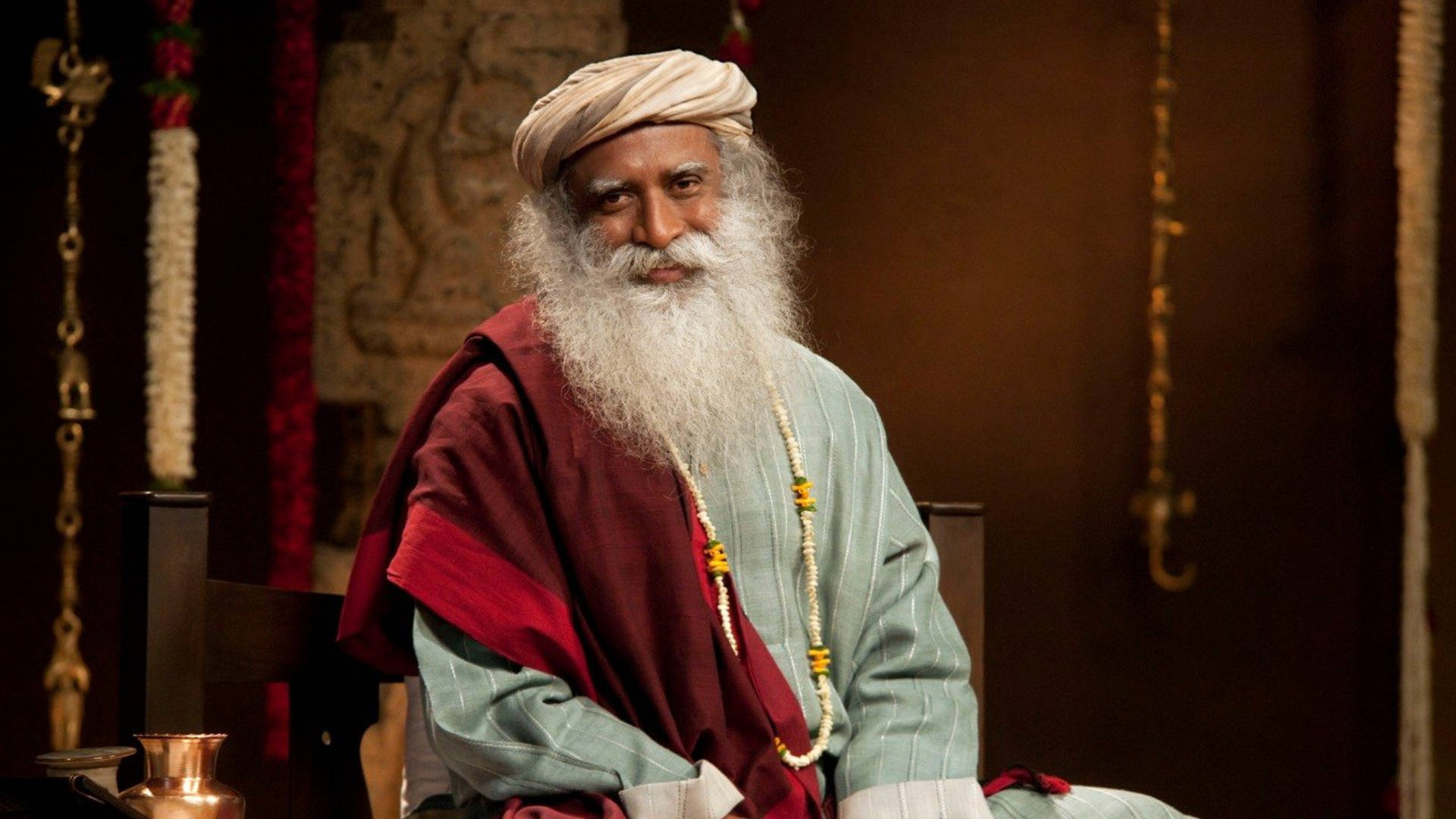
Most spiritual books try to uplift. Some try to challenge. Very few dare to confront the one truth every human being shares: we are going to die. Sadhguru’s Death: Only for Those Who Shall Die—A Yogi’s Guide to Living, Dying, and Beyond belongs unapologetically to this last category.
This book is not gentle. Nor is it dark. It is honest. And that honesty is its power.
The updated edition reframes death not as an abstract spiritual metaphor but as the single most intimate event of one’s life. From the first chapter, Sadhguru dismantles the idea that death is something that happens to ‘other people,’ writing, “If you understand that you are a fleeting presence, suddenly life will explode in your hands. Death is not the enemy—unconscious living is.” For me, this book sits squarely in familiar territory: uncomfortable, raw, and liberating.
Clarity, not comfort
Sadhguru approaches death the way a yogi approaches life: not as a philosophical argument but as experiential reality. His intent is not to console but to clarify. The book functions as a manual for understanding:
- what death actually is
- what happens in the body, mind, and energy
- how one can prepare for one’s own death
- how to support someone who is dying
- and, controversially, what lies beyond the last breath
The central thesis is disarmingly simple: “Death is the only certainty. Everything else is optional.”
Yet paradoxically, the only thing we refuse to look at is the one thing we cannot avoid. Sadhguru suggests that turning toward mortality is not morbid but freeing. Once we stop running from death, we can finally begin running toward life.
This is where yoga, in its original sense as a science of inner experience, takes center stage.
Why this book matters now
We live in an age obsessed with youth, enhancement, and control: a culture that sees death as a failure rather than a natural culmination. Death becomes medical failure, moral failure, and failure of power.
Sadhguru turns this conditioning upside down: “If you do not embrace death, you cannot embrace life. They are the same process seen from two directions.”
This perspective is especially resonant in a post-pandemic world, where mortality has been both exposed and misunderstood. For many spiritually inclined readers, the book becomes a bridge between ancient yogic insight and contemporary existential unease.
And for me, personally, the book is almost like a grounding cord, calling me to inhabit life with more consciousness, gentleness, and urgency.
Mapping the process of death
One of the book’s most compelling strengths is its detailed map of what happens during and after death from a yogic standpoint. Whether readers take these ideas literally or metaphorically, the clarity is unmistakable. Sadhguru describes the disconnection of the five elements, the stages of dissolution, and the moment consciousness slips out of the body.
“Death is not an event—it is a process. It begins long before the last breath and continues long after.”
For some, this framework will feel illuminating; for others, challenging. But for all, it serves as an invitation to look at mortality with a little less fear and a little more curiosity.
Facing grief, fear, and the body’s impermanence
This is not a book that reassures with poetic sentiment or promises of heavenly reunion. Instead, it cuts through illusions with clinical clarity. Sadhguru insists that our fear of death is essentially the fear of losing what we never owned.
“You do not own your body. You wear it for a time.”
For many of us who have experienced grief or illness, this can feel confronting. And yet others find the clarity softens the emotional fog that surrounds mortality. When the mechanics of death are understood even symbolically, fear becomes less amorphous. Grief becomes less overwhelming. And oddly, life becomes more precious.
How to die, help someone die
A significant contribution of this book is its attention to practicality. This is not merely a philosophical treatise; it is a guidebook. Sadhguru addresses:
- how to die with awareness
- how to create the right environment for a dying person
- what to avoid doing around someone nearing the end
- how to maintain peace, clarity, and dignity in the moment of passing
- the energetic logic behind rituals
- how to handle the body and the space after death
He writes, “The last moments of your life are as important as the birth of a child — for they determine the quality of your next beginning.”
Even if one does not subscribe to the idea of ‘next beginnings,’ the underlying message holds universal relevance: treat death with attention. With dignity. With sacredness.
Where readers may struggle
The book is rich and confrontational, but not without its challenging edges.
1. An openness to metaphysics is required.
Concepts like subtle bodies, karmic imprints, and past lives are presented as experiential certainties. If you prefer psychological or scientific frameworks, you will need to interpret these symbolically.
2. It does not align with Western psychological models.
There is no discussion of grief stages, emotional processing, or trauma theory. Sadhguru bypasses psychology entirely in favor of yogic metaphysics.
3. The tone can be absolute.
As in many yogic traditions, the voice is declarative rather than exploratory. Some may find that grounding; others, rigid.
4. The cultural context is unmistakably Indian.
Many descriptions assume familiarity with Hindu rituals and cultural practices, though he attempts to universalize their intention.
And yet, for those seeking a perspective not filtered through Western existentialism, these very elements may be the book’s greatest value.
“When you truly know you will die, you will walk this planet with gentleness, not with entitlement.”
Why it could resonate deeply
If you are someone who gravitates toward teachings that do not shy away from the mud of existence, then this book speaks directly into that sensibility. It issues a stark, compassionate exhortation:
- Stop running.
- Stop pretending.
- Look at death directly.
- Let it humble your ego.
- Let it sharpen your life.
Sadhguru writes, “If you carry death in your awareness, every moment of life becomes precious.”
This is not merely a conceptual insight. It is transformative. When mortality becomes a lived awareness, the small humiliations of daily living lose their grip. The mind becomes spacious. Priorities shift. Gratitude deepens. The heart loosens its clench around the illusion of permanence.
The cost of denial—and the freedom of acceptance
One of the book’s most compelling themes is how cultural denial of death impoverishes our living. We treat death as taboo and therefore live in a fog of fear: the fear of aging, fear of loss, fear of illness, and fear of emptiness.
Sadhguru suggests that accepting mortality dissolves these secondary fears. It creates a new interior landscape: clear, spacious, and alert. Living becomes less about accumulating certainty and more about experiencing life with fullness.
Awareness of death, he argues, does not lead to despair. It leads to responsibility. To gentleness. To a deeper connection. To a life lived consciously rather than defensively.
Reclaiming language around death
Another important thread in the book is the need to restore conversations around death. In modern life, we often have no vocabulary for it—no rituals, no shared meanings, no social frameworks. This silence leaves people unprepared, unsupported, and afraid.
Sadhguru calls for reclaiming that language through attention, preparation, and dignified practices. The book offers both a conceptual and practical foundation for this reclamation. For many readers, this alone makes it invaluable.
The book as a manual for living
Ultimately, though the subject is death, the book is profoundly about life. By examining the end, we begin to understand the middle. By understanding the impermanence of the body, we are encouraged to invest in awareness rather than accumulation.
Mortality becomes a mirror, one that strips away pretense and calls us into presence.
Disturbingly beautiful, quietly transformative
Death: Only for Those Who Shall Die is not a soothing spiritual book. It does not deal in reassurance. It presses against the softest fears and the deepest resistances. And yet, strangely, finishing it can leave one feeling lighter—not because it solves the mystery of death, but because it dissolves the panic around it.
It gives tools.
It gives perspective.
It gives a fierce, unusual courage.
More importantly, it gives permission: permission to live with tenderness and urgency, simply because our time here is finite.
For seekers walking a spiritual path, or simply trying to live with more presence and less fear, this book is a call to consciousness, an invitation to reclaim mortality so that we may reclaim life and the kind of hard, necessary medicine that deepens both living and dying. The book is published by Penguin and available on Amazon.

Jaggi Vasudev, widely known as Sadhguru, is a renowned Indian spiritual teacher, yogi, and author whose work bridges ancient yogic wisdom and contemporary life. He is the founder of the Isha Foundation, a non-profit organisation dedicated to human well-being through yoga, inner transformation, and social outreach. Sadhguru has authored several influential books, including Inner Engineering, Karma, Adiyogi, and Death: Only for Those Who Shall Die, through which he explores themes of consciousness, self-realisation, mortality, and the art of living with awareness. Known for his direct, unsentimental approach, his teachings invite individuals to engage with life’s deepest questions not as philosophy, but as lived experience.

Leave a Reply