

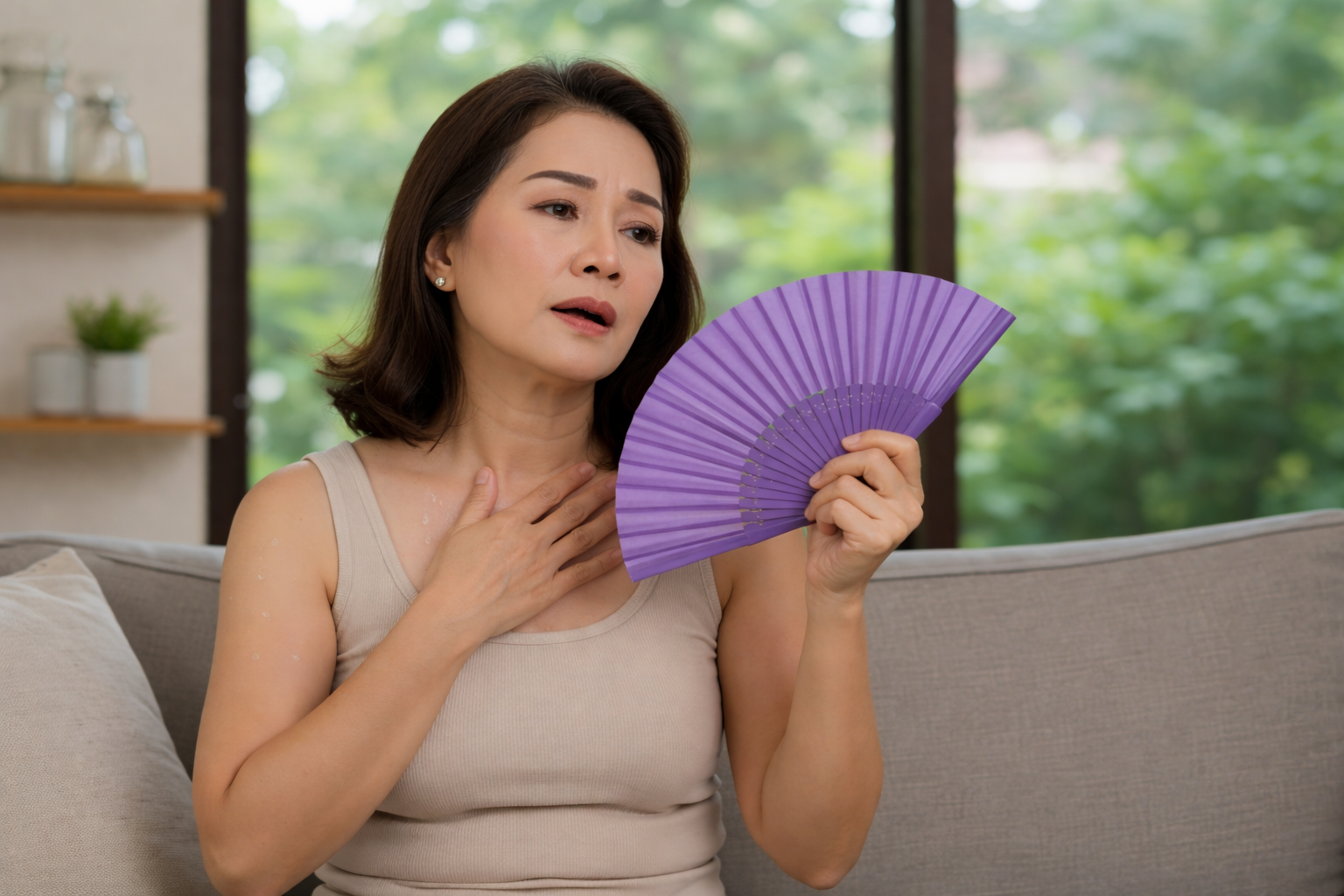
Akanksha Sharma, a 50-year-old marketing executive in Delhi, felt her confident stride falter. One minute, she was leading meetings with ease; the next, a sudden hot flush would leave her flushed and disoriented. Nights became restless stretches of broken sleep, punctuated by sweating and inexplicable wakefulness. At work, words she once summoned effortlessly now seemed to hover just out of reach.
Friends offered sympathetic shrugs. “It’s just the change,” someone said. “It happens to everyone.”
But Akanksha wanted more than quiet endurance. What she longed for was language, visibility, and understanding for this profound midlife shift.
Her story echoes the experience of millions of women around the world. Menopause, which typically occurs around age 46 in India and 48–51 globally, marks the end of reproductive years. Yet its impact extends far beyond biology, reshaping identity, relationships, and work.
“The hot flushes hit me like a ton of bricks on the second day after my total hysterectomy at 37. There was so little information available—even as a physician, I felt unprepared. Hormone therapy helped me reclaim my life. The symptoms eased, and I was able to return to my roles as a mother and professional. Over time, I have aged in step with my years, and despite early osteopenia, my quality of life has remained strong.” — Dr Mythily Shivakumar, Delhi-based Physician and Palliative Care expert, reflecting on early surgical menopause
By 2030, one in ten women worldwide will be post-menopausal, and women today may spend nearly a third of their lives in the post-menopausal stage. And yet, despite its universality, menopause has long been treated as a private transition — something endured quietly rather than openly discussed.
That silence, however, is beginning to break.
Across the world, women are speaking about menopause with new candour — in books, podcasts, workplaces, and increasingly on public platforms. What was once whispered about is becoming a cultural conversation.
Why menopause stayed invisible
For centuries, societies have struggled to acknowledge the natural transitions of the female body. Menstruation was shrouded in taboo. Menopause, arriving later in life, often slipped into near invisibility. Families rarely explained it across generations, and doctors often addressed it only when symptoms became severe.
On alotusinthemud.com, writer Navni Chawla’s piece “Menopause Matters: Building a Family Support System” reminds us that empathy and family awareness can significantly affect how women experience this transition.
Today, however, the conversation is expanding beyond the family into public discourse. One reason is demographic reality. India alone is expected to have over 130 million menopausal women in the coming years. Globally, increasing longevity means women are living decades beyond menopause.
Menopause, in other words, is not a brief biological event. It is a major life stage.

Beyond hot flushes: The hidden symptoms women miss
Popular culture often reduces menopause to hot flashes. But the real experience of perimenopause — the transitional years leading up to menopause — can be far more complex.
Hormonal shifts affect the brain, heart, metabolism, and nervous system, producing symptoms that many women do not immediately recognize as menopause-related. These may include: persistent fatigue, brain fog and word-finding difficulties, anxiety or mood changes, sleep disturbances, irregular periods, joint pain, sudden weight gain, heart palpitations, heightened stress sensitivity, and even reduced tolerance for alcohol or caffeine
Because these symptoms appear gradually, they are often misinterpreted as stress, ageing, or burnout. For many women, the most frustrating aspect of menopause is not the symptoms themselves but the lack of recognition that these changes are hormonally driven, echoing themes explored in our article on self-knowledge through the Enneagram.
Medical gaps: West and India
Despite affecting half the global population, menopause remains surprisingly under-researched. Many doctors receive minimal formal training in menopause care. Women frequently report that their symptoms are dismissed as anxiety or lifestyle issues.
In the West, menopause was historically medicalized, especially during the 1970s when hormone replacement therapy (HRT) was widely prescribed. In India, meanwhile, menopause has often been treated as a natural stage that requires little intervention.
Both perspectives miss the middle ground. Menopause is neither purely a disease nor something that should simply be endured. It is a complex biological transition that deserves informed care and cultural understanding.
Cultural taboos around ageing, menstruation, and reproductive health further complicate the picture. Many women—especially in rural India—hesitate to discuss symptoms openly. Healthcare providers may also overlook connections between menopause and conditions such as heart disease, osteoporosis, or mental health challenges. As a result, comprehensive menopause care remains limited.
For some women, however, the right intervention can be transformative. Dr Mythily Shivakumar adds: “Hormone therapy gave me my life back. The symptoms subsided, and I could function again—both at home and professionally.”
While menopause is a natural transition, the question of how it is supported remains uneven. For some women, relief comes through hormone therapy, which can ease hot flashes and protect bone health. Others turn to non-hormonal options, from low-dose antidepressants to sleep-supporting medications. Increasingly, women are also rediscovering the value of simple practices—walking, yoga, mindful eating, and reducing stimulants like caffeine and alcohol. What emerges is not a single solution, but a spectrum of care that blends medicine, lifestyle, and self-awareness.
Breaking the silence: Celebrities and public voices
In recent years, high-profile women have begun speaking openly about menopause, helping to dismantle decades of silence. International figures such as Michelle Obama, Naomi Watts, Gwyneth Paltrow, and Angelina Jolie have discussed midlife hormonal changes and the realities of perimenopause.
In India, the conversation is also emerging. Actor Neena Gupta has spoken candidly about ageing and women’s evolving identities. Wellness entrepreneur Malaika Arora and actor Kajol have both addressed midlife health in public forums. Author and columnist Twinkle Khanna has written humorously yet honestly about the unpredictability of perimenopause.
Meanwhile, bestselling books such as The Menopause Manifesto by Dr. Jen Gunter and What Fresh Hell Is This? by Heather Corinna have turned menopause into a mainstream conversation. Publishers have even begun discussing what one editor jokingly called a new literary genre: the “menopause thriller.” What was once private is becoming a cultural moment.
Western culture: From stigma to support
Western societies long tied a woman’s social value to youth and fertility, making menopause difficult to acknowledge openly. Anthropologists note that cultures that honor elder women often report fewer distressing menopause symptoms. Today, however, change is underway.
In the UK and Europe, workplaces are introducing menopause policies, offering flexible schedules, education programs, and support networks. Informal gatherings known as Menopause Cafés have also emerged, encouraging open conversations.
Midlife women at work
Menopause often coincides with the most influential years of a woman’s professional life. Many women in their forties and fifties are leading teams, mentoring younger colleagues, and shaping organizations.
Yet workplace culture rarely acknowledges the biological transitions women experience during this stage. Growing awareness is pushing organizations to recognize menopause as part of broader conversations around workplace wellbeing and gender equity.
The psychological turning point
Menopause is not only biological; it is also psychological. Children may leave home. Careers evolve. Long-standing identities begin to shift. Psychologists have long described midlife as a period of individuation, when individuals reassess the meaning and direction of their lives.
As relationship expert Esther Perel observes: “Midlife is not a crisis. It is a reckoning with the life we have lived and the life we still want.”
For Mumbai-based Aparna Dedhia, a content writer with the Aditya Birla Group, menopause became both disruption and insight: “It felt like a complete tabula rasa—my body rewriting its own rules. There were moments of discomfort, from sudden fatigue to what I jokingly call a nightly ‘Ganga snan’ of sweat. But somewhere between the fluttering heart and the unpredictability, I realized my body wasn’t failing me. It was asking me to slow down—and to hold, with care, the woman who has traveled this far.” In this sense, menopause becomes less about loss and more about reorientation.
Ayurveda’s Rajonivritti: Wisdom’s dawn
Traditional Indian systems of knowledge have long recognized menopause as a natural stage of life. In Ayurveda, menopause is known as Rajonivritti, the cessation of menstruation and the transition into the Vata phase of life, associated with reflection, wisdom, and spiritual awareness.
Rather than viewing menopause as a disorder, Ayurveda emphasizes balance through nourishing foods, yoga, meditation, and practices that calm the nervous system. Seen this way, menopause becomes not a problem to fix but a rhythmic shift in the body’s energy.
The rise of the wise woman
Across cultures, menopause has often marked the threshold of elderhood. Freed from the biological demands of reproduction, women historically stepped into roles as advisors, healers, storytellers, and community elders.
Anthropologists have even proposed the “grandmother hypothesis” — the idea that menopause evolved because older women increase the survival of families by supporting younger generations.
Jungian scholar Clarissa Pinkola Estés captures this beautifully: “A woman’s second half of life is meant for the unfolding of her deepest wisdom.”

“Menopause is not the end of a woman’s creative force; it is the moment when that force becomes fully her own.”
—Mother Maya, spiritual teacher and guide on feminine awakening
Ayurvedic teacher Maya Tiwari offers a similar perspective. She describes menopause not as a loss of vitality but as a sacred inward turning. In this phase, a woman’s life force — once directed outward through reproduction — becomes available for deeper creativity, spiritual insight, and service, awakening what she calls the wise woman consciousness.
A new narrative for menopause
For centuries, menopause was framed as a decline. Today, that narrative is shifting. Menopause is increasingly understood as a period of recalibration — a time when women reassess their bodies, identities, and priorities.
If the first half of life is often devoted to building careers and families, the years after menopause may offer something equally powerful: the freedom to live with clarity, authenticity, and renewed purpose.
From Delhi to London, from boardrooms to yoga studios, midlife women are reclaiming this stage of life. Menopause, it turns out, may not mark an ending at all.
It may simply be the beginning of a different kind of power.


Leave a Reply