




Mindful Musings
Ritu Chopra
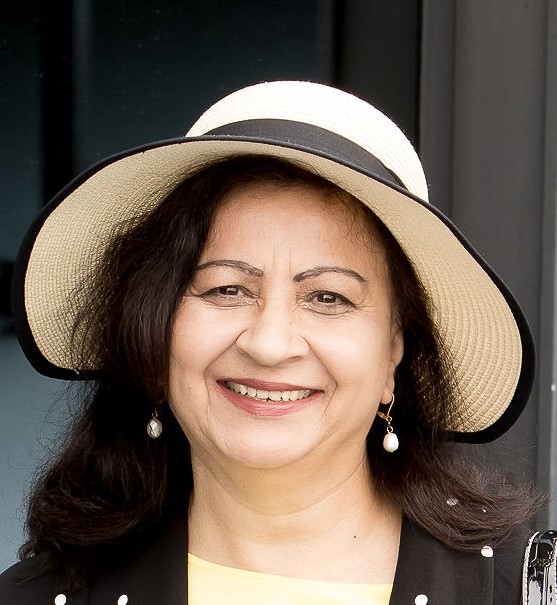
This is the third in a series of articles by executive coach Ritu Chopra. She supports professionals across age groups by integrating interpersonal acuity with exposure to global workplace methodologies, drawing on her leadership experience to influence organizations of every scale.
Long before we lose our way in life, we lose touch with the body.
We rush past sensations in moments of stress.
We distance ourselves when emotions feel heavy or inconvenient.
We trade presence for productivity without realizing the cost.
And yet, the body is where life is actually happening.
In spiritual spaces, we often speak about transcendence, rising above suffering, quieting the mind, and finding peace. But peace that bypasses the body is fragile. It floats above the mud rather than growing through it.
In modern life, many of us are living in bodies that carry a lot. Responsibility, stress, unspoken grief. Adaptation layered upon adaptation. The body absorbs what the mind moves past. It remembers what was never fully felt.
Making peace with the body is not about perfect health, constant comfort, or spiritual ideals. It is about ending the quiet war, the one fought through tension, judgment, and constant overriding of inner signals.
Living in a body that carries a lot
Our bodies are not passive containers. They are intelligent, responsive, and deeply relational.
Every time we pushed through exhaustion because there was no space to rest.
Every time we swallowed words to keep the harmony.
Every time, we stayed alert when it wasn’t safe to soften.
The body learned and adapted. Tight shoulders, shallow breathing, and fatigue are not moral flaws. These are signs of a system that has been trying to keep us safe, functional, and connected in demanding conditions.
The problem is not that the body carries a lot. The problem is that we often ask it to carry everything alone.
Listening to what the body is carrying
Making peace begins not with change but with listening.
- Listening without judgment.
- Listening without urgency.
- Listening without the need to fix.
When we slow down enough to listen, the body speaks in simple language—sensation, tightness, heaviness, restlessness, ease. It doesn’t dramatize. It doesn’t exaggerate. It communicates honestly.
The body may be saying:
- I’m tired of bracing.
- I need rest that isn’t earned.
- I’m holding more than belongs to me.
This kind of listening can feel unfamiliar. Many of us were taught, directly or indirectly, that attending to the body was indulgent or unnecessary. We learned to prioritize endurance over awareness.
But mindfulness invites a different relationship. It teaches us that attention is a form of care. When the body feels heard, it does not have to shout.
What the body has been holding
The body does not operate on intellectual timelines. It does not release simply because something is “over.” It releases when it feels safe enough to let go.
This is why slowing down can feel uncomfortable. When the noise fades, what has been held beneath it may surface: grief that never had space, fatigue that was postponed, emotions that were set aside to keep going.
The body carries layers of lived experience. Stillness and presence soften those layers, not all at once, but gently and honestly.
Making peace is not fixing
Making peace with the body does not mean liking every sensation or forcing gratitude. Peace is quieter than that. It is the willingness to stop fighting.
It sounds like
- I will listen before I push.
- I will respect signals rather than override them.
- I will treat this body as an ally, not an obstacle.
When the body senses safety, it begins to settle. Breath deepens. Muscles soften. Energy redistributes as the conditions change.
In a culture that praises endurance, gentleness is often misunderstood. But gentleness is not weakness. It means recognizing that strength does not require tension, and commitment does not require self-abandonment.
A body at peace is not passive. It is resilient, responsive, and alive.
When we make peace with the body, we stop surviving our lives from the neck up. We begin to inhabit them fully, grounded, present, and connected.
Making peace: The body as your sacred temple
It is where breath meets emotion. Where stillness meets sensation. Where wisdom becomes lived experience.
The lotus does not reject the mud. It draws nourishment from it.
Spiritual growth that excludes the body remains abstract. Growth that includes the body becomes integrated.
Perhaps making peace with the body is not about becoming something new. Perhaps it is about returning, again and again, to the place where life is already unfolding.
The body has been waiting patiently; give it the presence and attention it deserves and make peace with mind and spirit.
Leave a Reply