


It often begins without warning
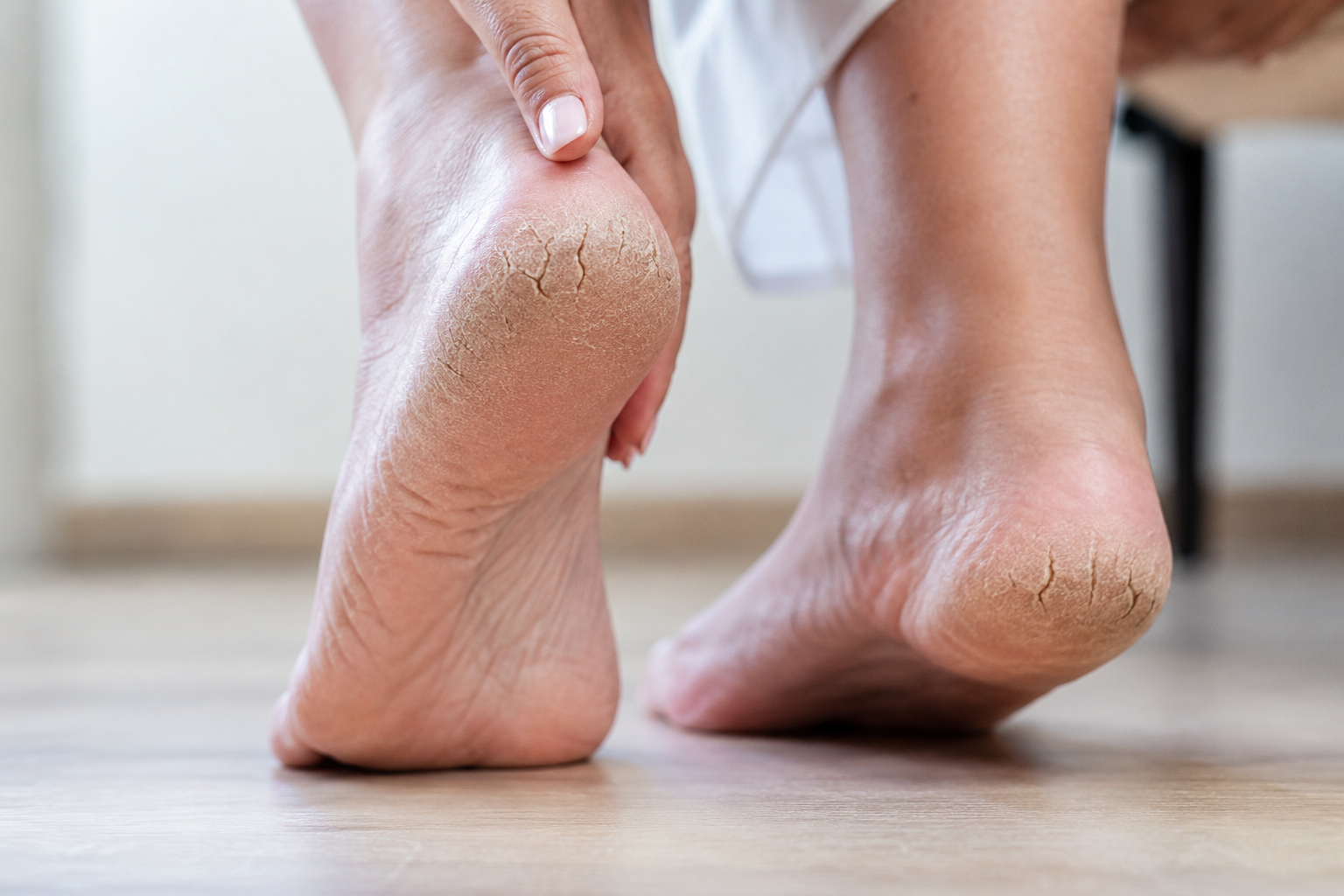
The skin on the soles starts feeling unusually dry. Then it begins to peel. Soon, the heels develop deep cracks, and the edges of the feet become so sharp they can scratch the skin when the feet rub together. Moisturizers offer only temporary relief, leaving many women wondering, “What is happening to my body? Is this a sign of something serious?”
For thousands of women after menopause, these distressing changes trigger anxiety. Yet few realize that dry, cracked feet can be linked to hormonal changes. Fewer still discuss it with their doctors.
While awareness around menopause has grown, conversations largely revolve around hot flashes, osteoporosis, heart health, and mood changes. One symptom continues to be overlooked—painfully dry, peeling feet.
Dr. Varuna Verma, consultant, obstetrics and gynecology, Hill Candy Hospital, Bokaro Steel City, Jharkhand, says dry, cracked, and peeling soles are “rarely recognized as a symptom of menopause.”
“Also, the media rarely discusses it. Even when doctors are aware, they rarely talk about it as it is not considered ‘important’ enough as compared to osteoporosis or hot flushes or cardiac effects of menopause,” she adds.
The lack of awareness is striking given the sheer number of women affected by menopause in India.
According to the Longitudinal Ageing Study in India (LASI 2017-19), which analyzed data from 25,256 women, nearly 75% of Indian women experience menopausal symptoms, yet less than 10% seek medical care.
By 2030, an estimated 1.2 billion women worldwide will be menopausal or post-menopausal, many experiencing symptoms that affect their health, relationships, and quality of life, says a report.
Why does menopause affect the feet?
When it comes to dry, cracked feet after menopause, the primary culprit is the sharp decline in estrogen. Dr. Denise Rodrigues, a homeopathic physician at Evolve Homeopathic Clinic, South Goa, believes every woman deserves to understand what is actually happening to her body.
“During menopause, estrogen declines, and declining estrogen means the skin loses its ability to hold moisture and rebuild collagen. Estrogen keeps oil glands active and supports hydration, elasticity, and collagen production—as it drops, the skin thins, the oil glands slow down, and the feet crack and dry,” she said.
Menopause, the natural end of a woman’s reproductive years, is diagnosed after 12 consecutive months without a menstrual period and typically occurs around age 52. The sharp decline in estrogen and progesterone during this transition triggers widespread changes throughout the body, affecting the skin, bones, heart, brain, metabolism, and emotional well-being.
Dr. Denise adds that hormones are only part of the story.
“Holistically, it’s more than hormonal. As many of my patients describe it, menopause is a transition of becoming—mind, body, and soul—and stress, poor sleep, reduced circulation, and nutritional deficiencies all shape how severely that shows up on the skin,” she said.
Although the decline in estrogen levels is widely recognized as a key factor,
Dr. Varuna points out that the exact mechanism by which estrogen affects the skin is still not fully understood.
“Various studies have shown delayed wound healing in estrogen-deficient stages. The skin has three different estrogen receptors. Keratinocytes have ER-beta receptors. These stimulate collagen type I and type III synthesis and also increase vascularity. There is a decrease in estrogen receptors after menopause, resulting in increased dryness and decreased firmness and elasticity.”

Why women rarely mention it
Experts say the condition often goes unnoticed due to limited awareness, socioeconomic barriers, and women’s tendency to dismiss dry, cracked feet as a cosmetic problem or a natural part of aging.
“The problem is often underreported because many women attribute it to aging, weather, or footwear rather than menopause,” says Dr. Pallavi Vasal, director and head, obstetrics & gynecology, Marengo Asia Hospitals, Gurugram.
She also cautions that the condition deserves attention.
“Menopause is often associated with hot flashes, mood changes, and bone health, but many women also experience an overlooked symptom—dry, cracked feet. While it may seem like a cosmetic concern, painful cracks can make walking uncomfortable, affect quality of life, and increase the risk of infection if left untreated.”
She adds, “Other factors such as reduced sweating, poor circulation, nutritional deficiencies, and walking barefoot can further worsen the condition.”
Dr. Varuna’s clinical experience echoes these concerns, demonstrating how lack of awareness and social attitudes prevent women from reporting the condition.
“In my clinical practice, it’s extremely rare. Dry feet is definitely under-reported, as it’s considered a cosmetic problem, not to be discussed with a gynecologist,” she said.
Also, in low socioeconomic classes, people don’t see the doctor unless it hampers day-to-day functioning. This is assumed to be a normal aging issue.”
Could dry feet signal something more?
Although menopause is the most common cause, experts say persistently dry, cracked feet should not automatically be blamed on hormones.
“Hormonal decline is the main driver, but not the only one. Thyroid dysfunction, vitamin B12 and vitamin D3 deficiencies, diabetes, and anemia can all show up first as dry, cracked feet,” said Dr. Denise.
“So alongside the menopausal picture, I ask about the person, their life story, cravings, aversions, dreams, fears… The feet are often just the messengers for something happening elsewhere in the body.”
For women entering menopause, the message is simple: dry, cracked feet are not merely a cosmetic inconvenience. They may be one of the body’s earliest signals that hormonal changes are affecting the skin—or, in some cases, a clue to an underlying health condition that deserves medical attention.
What can women do
The good news is that while dry, cracked feet can be uncomfortable, experts say the condition is manageable with the right combination of skin care, nutrition, and medical help.
According to Dr. Varuna, prevention begins with the basics.
“This problem will vary from patient to patient. It can be prevented by general measures such as a proper diet with the correct proportions of macro- and micronutrients, especially vitamins A, E, and C; good hydration; and moisturizer. Proper cushioning and supporting footwear is very important.”
She adds that some women may also benefit from specific medical therapies.
“There are specific treatments like Hormone Replacement Therapy (HRT) and Selective Estrogen Receptor Modulators (SERMs), which can be taken after consultation with the doctor,” she said.
She also cautions that diabetes can first appear around this age, making “proper hygiene, exfoliation, inspection, and moisturizing” essential.
Dr. Pallavi also echoes the importance of everyday foot care and says that “simple daily measures can make a significant difference.”
She recommends “regular use of a thick moisturizer containing urea, ceramides, glycerin, or petroleum jelly, especially immediately after bathing,” along with staying well hydrated, eating a balanced diet rich in protein, vitamins, and omega-3 fatty acids, exercising regularly, and wearing well-fitting, supportive footwear.
She also advises women not to ignore warning signs.
“Women should seek medical advice if the cracks are deep, painful, or bleeding; if there is redness, swelling, pus, or fever; or if the condition persists despite good skin care.” She says underlying conditions such as diabetes, hypothyroidism, eczema, psoriasis, and fungal infections should also be ruled out.
For Dr. Denise, treatment goes beyond healing the skin.
“I never look at just the diagnosis or the symptom—I look at the story, the lived experience of the person in front of me.”
“When a woman comes to me with cracked, peeling feet, I’m not matching a remedy to dry skin. I’m asking what this transition means for her—what she’s shedding, what she’s carrying, and what her body is expressing that she hasn’t yet put into words.”
She says her approach combines homeopathy with nutrition, counseling, and body-based therapies.
“It’s never a remedy for a symptom. It’s a remedy held within her story.”
According to Dr. Denise, the goal is lasting healing rather than temporary relief. “Definitely long-term—that’s the intention and the goal of homeopathy: to shift the person, permanently, not just the symptom. A cream can dry up cracked skin temporarily, but if the underlying terrain—hormonal, emotional, or somatic—hasn’t shifted, the body finds another way to express what’s unresolved.”

Healthy feet need more than a moisturizer
Simple moisturizers alone, however, may not be enough.
“Moisturising creams can help but are not enough. Keratolytics such as 10% or 20% urea are needed. Proper exfoliation is also important. While the condition can be reversed to some extent, lifelong care is needed,” says Dr. Varuna.
Like her fellow doctors practicing in different parts of the country, Dr. Denises too recommends practical lifestyle measures alongside treatment.
Her care tips include omega-3-rich foods such as flaxseed, walnuts, and fish; adequate hydration and electrolytes; checking vitamin D, B12, and iron levels; gentle exfoliation instead of harsh scrubbing; applying natural moisturizers like shea or cocoa butter while the skin is still damp; wearing cotton socks overnight to lock in moisture; and avoiding very hot water, which strips the skin of its natural oils.
A final piece of advice from Dr. Pallavi, who says that “dry, cracked feet are not just a sign of aging—they can be a genuine consequence of menopause. Don’t ignore persistent symptoms or dismiss them as merely cosmetic.”

Leave a Reply