



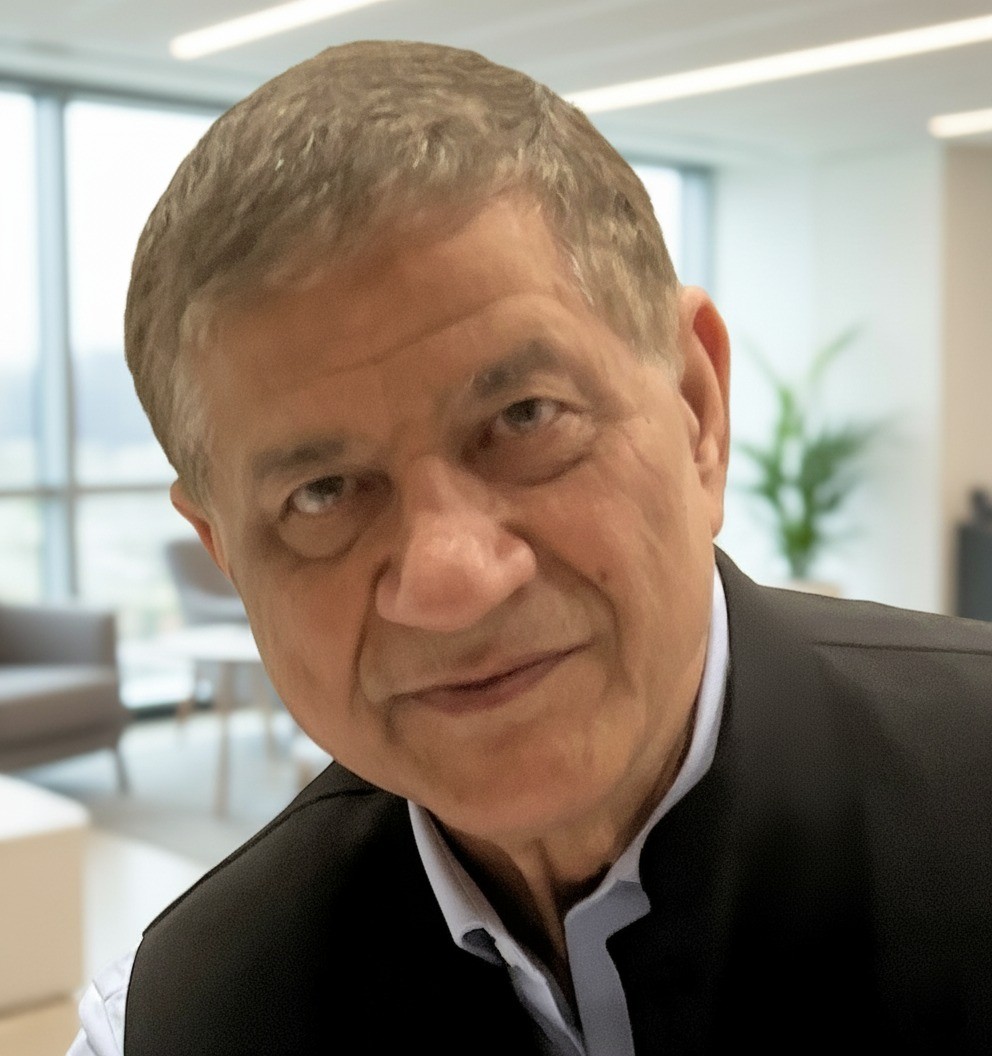
We became aware of Dr. Shrenik Shah, MD, when he published his debut book, ‘Practical Spiritual Life’, a few months ago. What is remarkable about him is that he recommended spiritual principles to his patients, positively impacting the lives of numerous individuals. His book compiles a few striking case histories. One of the two excerpts from the book Lotus published from ‘Practical Spiritual Life’ is a hair-raising story of the police officer who ended up killing a black man while saving the life of the suspect’s daughter. Agitation and mental turmoil gave way to peace for the officer when, referencing Lord Krishna’s Gita sermon to Arjuna, Dr Shah explained to him that he had followed his dharma.
For nearly two decades before his retirement, Dr Shah’s deepening spiritual practice transformed both him and the way he cared for his patients. “For me, spiritual knowledge has value only if it can be proven helpful in daily life and able to solve day-to-day problems; otherwise, it becomes a burden on the mind,” he tells Lotus in this email interview he gave to Parveen Chopra, Founding Editor of ALotusInTheMud.com.
Dr. Shah provided concise and impactful answers to our questions about how to stay healthy and fit, as well as his hobbies, including hiking and running marathons, climbing mountains like Kilimanjaro and Machu Picchu, and volcanoes such as Cotopaxi and Chimborazo in Ecuador, and Pacaya in Guatemala. He also visited Everest Base Camp last year at 17,600 feet and recently completed a successful pilgrimage to Mt. Kailash, where he performed a parikrama by climbing over the Dolma La Pass at 18,500 feet.
Parveen Chopra/ALotusInTheMud.com: You are a doctor yourself and a Jain – you must have been vegetarian. So, how come you had a heart attack in 2001?
Dr. Shrenik Shah: Not all vegetarian foods are healthy. Concentrated carbs, oils, fried foods, sugary drinks, dairy, etc, also fall under vegetarian foods, but are even worse than eating meat. That was my diet before the heart attack.
How did you reverse your heart disease?
Dr. Shah: By adopting a healthy, plant-based diet and increasing exercise significantly. Running every day, running marathons, climbing mountains, hiking, etc. But this was not easy. Spirituality (meditation) played a crucial role in helping me make the right choices in life to achieve this goal.
What made you turn vegan two decades ago when the concept was not that well-known? What is the self-developed plant-based diet you adopted?
Dr. Shah: My inspiration was a lion in Kruger National Park in South Africa, which was majestic and striking, and looked incredibly fit. It made me realize that being physically fit is not a pursued goal for lions, but rather a natural state, a necessity for survival. Our society has compromised our lifestyle by providing numerous choices, and when faced with two options, we often tend to choose the wrong one. As J. Krishnamurti said, “Freedom to choose is a great freedom to have, but to have a freedom from your choices is the ultimate freedom.”
That’s when I decided to start a vigorous exercise program. Additionally, if I stayed in the forest, I would essentially be living on natural foods, since humans in their natural form are not given any hunting appendages like those of carnivorous animals. This led me to adopt a raw food diet (80%) – a life of choicelessness. Also, I did not see any source of milk in the jungle. In the wild, a mother reserves her milk only for her babies, unlike we humans, who unphysiologically drink another animal’s milk, inviting ailments such as heart disease, diabetes, obesity, and some cancers. That day, during the Kruger safari, I stopped dairy.

These days, modern doctors rarely discuss diet; when asked, they often advise consulting a nutritionist. But we seldom take the trouble to visit a nutritionist. What is the solution?
Dr. Shah: A course in nutrition should be included in all medical schools’ curricula, and all practicing physicians should be required to obtain a Lifestyle Medicine Certification, which is based on the healthiest diet of all: Whole food, plant-based diet – the ultimate savior for planet Earth and its residents.
You have been giving talks on the whole food, plant-based diet on behalf of World Vegan Vision. Tell us about it.
Dr. Shah: I have served as president of World Vegan Vision – New Jersey, and am currently a Medical Director for them. I have spoken on several platforms, ranging from public outreach to online sessions and numerous live sessions for diverse audiences, including medical and non-medical individuals, various physician groups, medical societies, and select organizations. My talks have been well-received.
South Asians have a high incidence of diabetes and heart disease. A recent ICMR (Indian Council of Medical Research, New Delhi) study has attributed the high-carb, low-protein content of the Indian diet to these health issues. What do you think?
Dr Shah: I agree absolutely. Similar findings have been reported in the Dr. Alka Kanaya-led MASALA study in America. South Asians’ diet is heavily centered around concentrated carbs, oils, sugary foods and drinks, dairy products, and fried food, with fruits and vegetables being consumed in much smaller quantities. The highest incidence of heart disease in the world is found among South Asians.
It is animal cells alone that cause cholesterol, you contend. Please elaborate, and what about oil?
Dr Shah: Cholesterol is a sterol, a lipid molecule that makes the cell walls of every animal cell. That means if you eat any part of the animal or consume animal products, you will be consuming cholesterol. So, naturally, to reduce cholesterol, the first step is to eliminate meat and dairy consumption by adopting a whole-food, plant-based diet. All plants’ cell walls are made of cellulose, which is zero cholesterol.
Most of the plant-based oils have unsaturated fats, but some oils can be high in saturated fats (like coconut oil, palm oil, etc), which can increase LDL (bad cholesterol). Still, various studies have reported conflicting findings on this association. One fact is evident, though: none of the plant-based oils, despite being high in saturated fats, contain any cholesterol. Either way, a proper, whole-food, plant-based diet avoids (or minimizes) all kinds of oils anyway.
“A scientific approach is necessary when embarking on a spiritual quest to discover and connect with your true self. The only difference is – in science, the scientist is a subject, and his project in the lab is an object. In meditation, your consciousness is the subject, and your mind is the object.”
~Dr Shrenik Shah, author of ‘Practical Spiritual Life’
You say Indians don’t exercise enough. How does exercise help?
Dr Shah: Exercise has several benefits. It increases good cholesterol, reduces triglycerides, aids in weight loss, and helps prevent heart disease, type 2 diabetes, and certain types of cancers. Benefits of exercising extend to promoting the release of endorphins and fostering a sense of confidence in life.
I ran six and a half marathons in the past and now hike daily. Hiking is mentally and spiritually calming.
People know what is good for them, but are unable to follow it. So, how do you control the mind that controls the body?
Dr Shah: That is a very profound subject, but in brief, meditation can be beneficial. The mind cannot be controlled (a negative approach), but it can be made less valuable by realizing the power of pure awareness, which is transcendental; this is a positive approach. If practiced diligently, meditation increases your awareness, enhances your wisdom (Vivek buddhi – the ability to distinguish right from wrong), and brings peace to life by enabling you to make the right choices.
When did you start meditating? Which technique or system do you follow?
Dr Shah: I started meditating in 2001. I used a direct method of being a witness – what you observe, you cannot be that. This way, by using the technique of neti neti (not this, not this), you reach the truth of life—that Consciousness alone is.
Tell us about your spiritual experiences. Have you achieved the state of self-realization/enlightenment?
Dr. Shah: I have delved quite deeply into spirituality and had various experiences, but I prefer not to discuss them, as it does not benefit the speaker or the audience. On the contrary, it might prove harmful for others by setting a specific goal to achieve, which is not the right way to meditate.

You say you have a scientific approach to spirituality, so how does one measure spiritual growth?
Dr. Shah: A scientific approach means being vigilant, curious, relentless, truthful, impartial, and diligent in experimenting. Whatever results emerge from such an honest search, a scientist accepts them. Only then can a scientist conduct a truthful scientific experiment. A similar approach is necessary when embarking on a spiritual quest to discover and connect with your true self, which is, in essence, the truth.
What inspired you to write the book ‘Practical Spiritual Life’? How has it been received?
Dr. Shah: For me, spiritual knowledge has value only if it can be proven helpful in daily life and able to solve day-to-day problems; otherwise, it becomes a burden on the mind. Utilizing this principle, I gained a great deal from spirituality and decided to apply it to my patients. This approach has helped many of my patients, and I realized that such excellent experiences should be shared with the world.
The book, available on Amazon, has been very well received and is getting great reviews.
In ‘Practical Spiritual Life’, you have used a unique format — each chapter is a patient case study. What was your overall experience applying spiritual wisdom in your medical practice?
Dr. Shah: My experience has been fantastic, a pure joy. Without spirituality, I was conducting the practice like any other physician, with a goal-oriented approach. When spirituality entered my life, it seemed like the perfect ingredient, an ideal spice, was added to my professional life, turning it into a pure heaven.
We learn that you have written your autobiography. What are the salient points of that book? What will readers learn from that?
Dr. Shah: I am working on my autobiography. It is about how my life took unexpected turns through various interesting events, which shaped my spiritual journey and ultimately led to spiritual unfoldment. Additionally, the book will offer an intimate glimpse into my inner journey, which makes it seem as though the consciousness must have chosen me to become a vehicle for transmitting this precious knowledge of the Self to the world. Nothing more can be explained at this point about such profound inner experiences.

You also issue a Newsletter sharing your wisdom and spiritual practices. Are you turning into a spiritual guru? In the coming years, what do you plan to accomplish?
Dr. Shah: I have had a WhatsApp group, “Experiences Only,” for the last 12-13 years, where I share my daily meditative experiences with many on the spiritual path.
My goal is simply to spread the message of a joyful life that we can all live by following the spiritual path. I don’t plan anything in life; I just let life bring me whatever is appropriate for me.
What did you achieve by undertaking the Kailash Yatra? Have you had any memorable experiences during the Mansarovar parikrama?
Dr. Shah: The Parikrama (Kora) around Mt. Kailash was a wonderful experience. There is nothing to achieve in this world, only to lose your fake identity (that you never were). At the Yam Dwar, which is a gate everyone passes through before starting the 3-day Parikrama, I entered while staying in the state of Shunyata, allowing my mind to die. Staying in the state of Shunya, I entered the realm of Shiva, beyond the Yam Dwar, and I was ready to accept any possible outcomes that might arise.
I stayed silent on the first day and felt a profound connection to the higher Self. The second day of Parikrama was the toughest, as it involved climbing Dolma Pass at 18,500 feet, descending a rugged terrain, and then walking 7.5 miles. The last part was physically challenging. Many people had hired horses and jeeps to complete that journey, but I remained fully aware (thanks to my years of meditation), directing my exhausted body to reach the final goal. This way, I kept my promise to Shiva of accepting any possible situations on the journey and facing them courageously. This avoided causing harm to the innocent horses and also demonstrated the soul’s victory over the mind.
Tell us about your family.
Dr. Shah: I live with my wife, Sushma, in Cedar Grove, New Jersey. We have a son, Dr. Shenil Shah, a pulmonologist, who is married to Sapana, a pediatrician. We also have three cute grandchildren: Nikhil, Rishi, and Kunal, the joys of my life.
Dr Shah’s book is available on Amazon: https://www.amazon.com/Practical-Spiritual-Life-day-day/dp/B0FFT9BD7G
For a guided meditation devised by Dr Shrenik Shah, click here….
Leave a Reply