
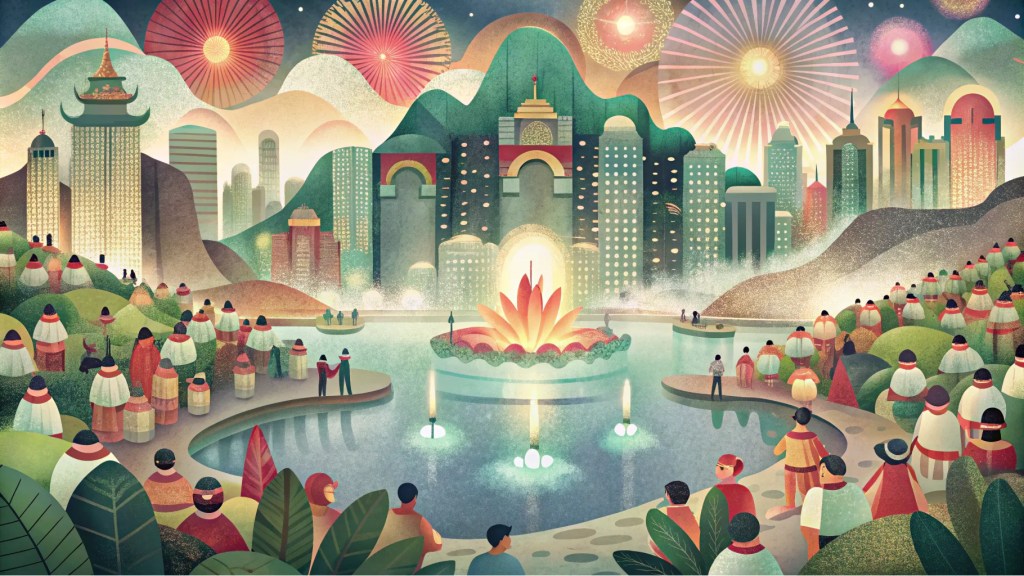

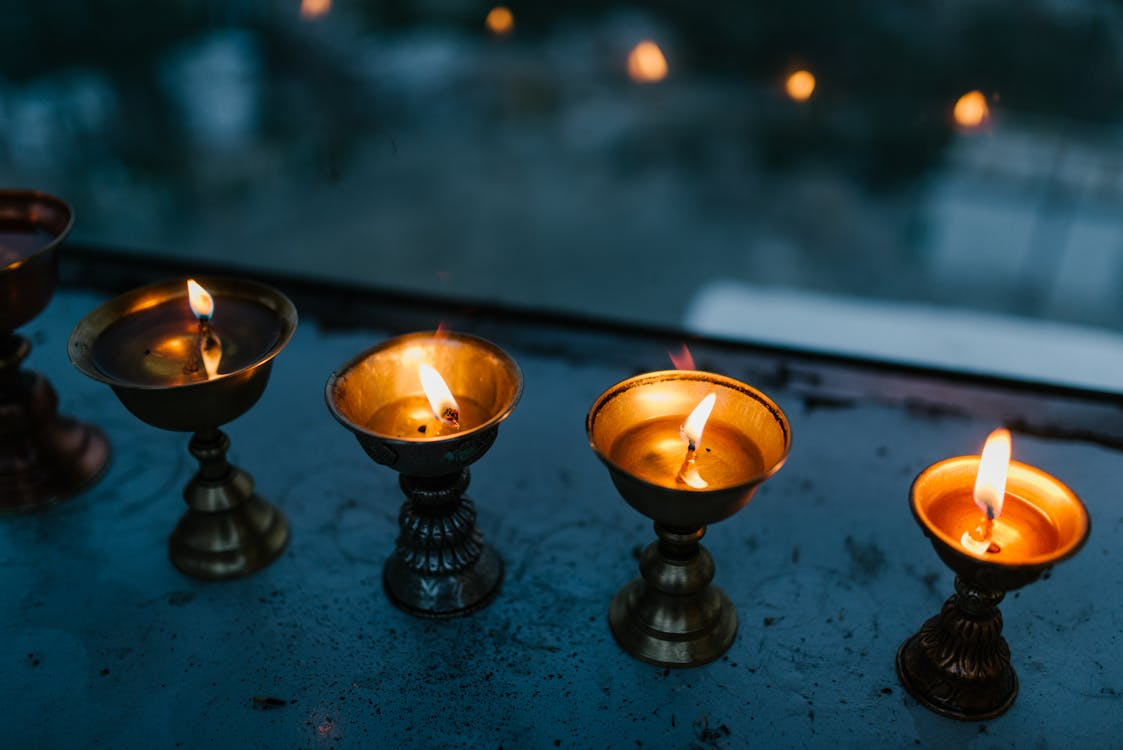
Every year, as the night sky fills with a shimmer of lamps and the scent of fresh earth and ghee, Diwali arrives—luminous, familiar, yet forever new. The annual Festival of Lights is one of the most enduring celebrations in human culture, observed not only across India but increasingly across the world. But beneath the firecrackers, diyas, and sweets lies something far deeper—a timeless psychological need. Diwali endures because it mirrors the inner architecture of the human psyche—our perennial craving for clarity, meaning, and integration.
The celebration of light over darkness and wisdom over ignorance is not merely a spiritual metaphor. It is an archetypal response to a universal psychological condition—our longing to bring awareness into the shadowed corners of our minds.
The Natural Attraction and Symbolism of Light
As human beings, we are drawn to light, which psychologists call phototropism—the innate attraction to brightness as a sign of safety and vitality. From a symbolic and archetypal perspective, darkness represents uncertainty, the unconscious, and fear, while light signifies cognitive clarity, awareness, and the expansion of consciousness.
In Indian philosophy, this is expressed as the transition from Tamas (inertia and ignorance) to Sattva (purity and illumination). Each lamp lit during Diwali is not merely a decorative ritual—it is a small act of personal alchemy, transforming fear into understanding and confusion into insight. Lighting a lamp is the psyche’s way of remembering that illumination is both an outer and inner act—that clarity begins within.
The Inner Self: Light as Integration and Awareness
From a Jungian psychological lens, the flame represents the individuated Self—the unifying force that integrates the conscious and unconscious aspects of being. Carl Jung wrote, “One does not become enlightened by imagining figures of light, but by making the darkness conscious.”
This, to me, is the unspoken essence of Diwali because the light does not annihilate darkness; it reveals it, makes it intelligible. In this sense, Diwali is less about triumph and more about reconciliation—the integration of shadow and spirit into a whole, illuminated being. Every flicker of the diya mirrors this silent act of self-realization, a call to look within and make peace with the unknown.
How Rituals Foster Psychological Renewal
The customs that precede Diwali—cleaning, decluttering, and renewal—are not incidental. They serve a profound psychological function. In anthropological terms, these symbolic actions bridge the gap between the conscious and unconscious mind, providing a structured, culturally sanctioned framework for processing significant inner transitions.
When we sweep our homes or light rows of lamps, we are engaging in embodied acts of psychological cleansing—external gestures that reflect an internal yearning for renewal. This is why Diwali continues to resonate, even in a hypermodern, digital world: it offers ritualized pathways to psychological balance and meaning.
The Necessity of Darkness: Amavasya and Shadow Work
Every Diwali begins with darkness—Amavasya, the new moon night of complete shadow. This is not a coincidence but a design. In psychological terms, it represents the fertile void, the phase of shadow work where the mind confronts its hidden fears and unintegrated aspects.
True illumination, as mystics and psychologists alike suggest, is not achieved by denying darkness but by integrating it. Though various translations of Rumi’s poetry exist, the widely cited line ‘The wound is the place where the light enters you‘ eloquently conveys the Sufi theme that healing occurs through openness to suffering and light. To light a diya on an Amavasya night, then, is to offer awareness into darkness, not as rejection but as acceptance—the act of seeing oneself wholly.

Diwali is an ancient neuroscience of well-being—a ritual return to balance and joy. True freedom, as the gurus taught, lies in both outer liberation and inner light.
How Light Exposure Boosts Well-being and Calm
Modern neuroscience now validates what ancient ritual has long embodied. Exposure to light regulates the production of serotonin, the neurotransmitter of well-being and joy. The simple act of lighting a lamp, sitting in stillness, or gazing at a flame activates the parasympathetic nervous system, inducing calm, safety, and focused attention.
The deepest light, however, arises from within. States of gratitude, compassion, and self-awareness activate neural pathways associated with connection and empathy. In this sense, Diwali can be understood as an ancient, embodied neuroscience of well-being, a ritual system designed to bring the mind back into balance. The festival’s eternal mantra remains: Tamaso mā jyotir gamaya, meaning lead me from darkness to light, from ignorance to awareness.
The Illuminationist Philosophy: Understanding Light as Being
The Persian philosopher Shihab al-Din Suhrawardi, founder of the Illuminationist school (Hikmat al-Ishraq), envisioned reality as a hierarchy of light, emanating from the Nūr al-Anwār, the “Light of Lights.” For Suhrawardi, darkness is not a rival but the absence of light, and all existence is graded by the intensity of its illumination.
This vision aligns intimately with the spirit of Diwali. Lighting the diya becomes an ascent through these degrees of Light—a conscious journey from the corporeal and shadowed towards the luminous and divine. True knowledge, Suhrawardi wrote, is not discursive but illuminative—it is Ishraq, the direct, self-evident presence of the Light itself.
Light as Wisdom in Buddhist Philosophy
A resonant corollary exists in Buddhist philosophy, where the lamp represents Prajñā, the light of wisdom that dispels Avidyā (ignorance). The Buddha’s injunction, Atta Dīpa Bhava (“Be a lamp unto yourselves”), encapsulates the psychological heart of Diwali. The external lighting of the dīpa becomes a mirror for the inner cultivation of awareness, where each flame signifies the birth of insight that ends the cycle of confusion.
Here too, illumination is liberation—the awakening that comes when one realizes that the light long sought in temples and the rituals was always within.
Sikh Philosophy: Light as Liberation
In Sikh thought, Diwali coincides with Bandi Chhor Divas, the Day of Liberation—commemorating Guru Hargobind Sahib’s release, along with 52 kings, from imprisonment. Yet, beyond the historical narrative lies a profound spiritual metaphor.
In Sikhism, the Guru is the embodiment of Light, leading humanity from Gu (darkness) to Ru (illumination). The festival’s sea of lamps, especially at the Harmandir Sahib (Golden Temple), is a radiant reminder that the true Jot, or Divine Light, resides within all beings.
Thus, Diwali’s illumination becomes both a call to social justice and a spiritual awakening: a reminder that true freedom is twofold: the liberation of society from oppression and the liberation of the self from ignorance.
Philosophical Reflections on Light and Consciousness
The late philosopher Bimal Krishna Matilal wrote that “Light, in Indian thought, is not merely a metaphor for knowing; it is the very condition that makes knowing possible.” In Diwali’s context, this insight deepens the festival’s relevance—it is not only a celebration of knowing what is true but also an enactment of the very process through which consciousness illuminates itself.
Similarly, philosopher Jonardon Ganeri, whose work bridges Indian philosophy and the philosophy of mind, suggests that consciousness is “a self-luminous phenomenon — knowing and being known are not separate acts.” This vision resonates deeply with Diwali’s essence: the light we seek is the same light through which we see. The diya is thus both the object and the instrument of perception—a symbol of self-reflexive awareness.
From Darkness to Light: The Eternal Psychology of Illumination
Across traditions, be they Hindu, Buddhist, Sikh, or Illuminationist, Diwali speaks to a shared human psychology: the yearning to become whole through light. The ritual of illumination bridges the sensory and the symbolic, the neurochemical and the mystical. It reminds us that our greatest darkness is not outside us but within—and so is the light that redeems it.
When we light a lamp this Diwali, we participate in an ancient dialogue between psyche and cosmos, mind and matter. We remember that illumination is not an escape from darkness but its transformation.



Leave a Reply