


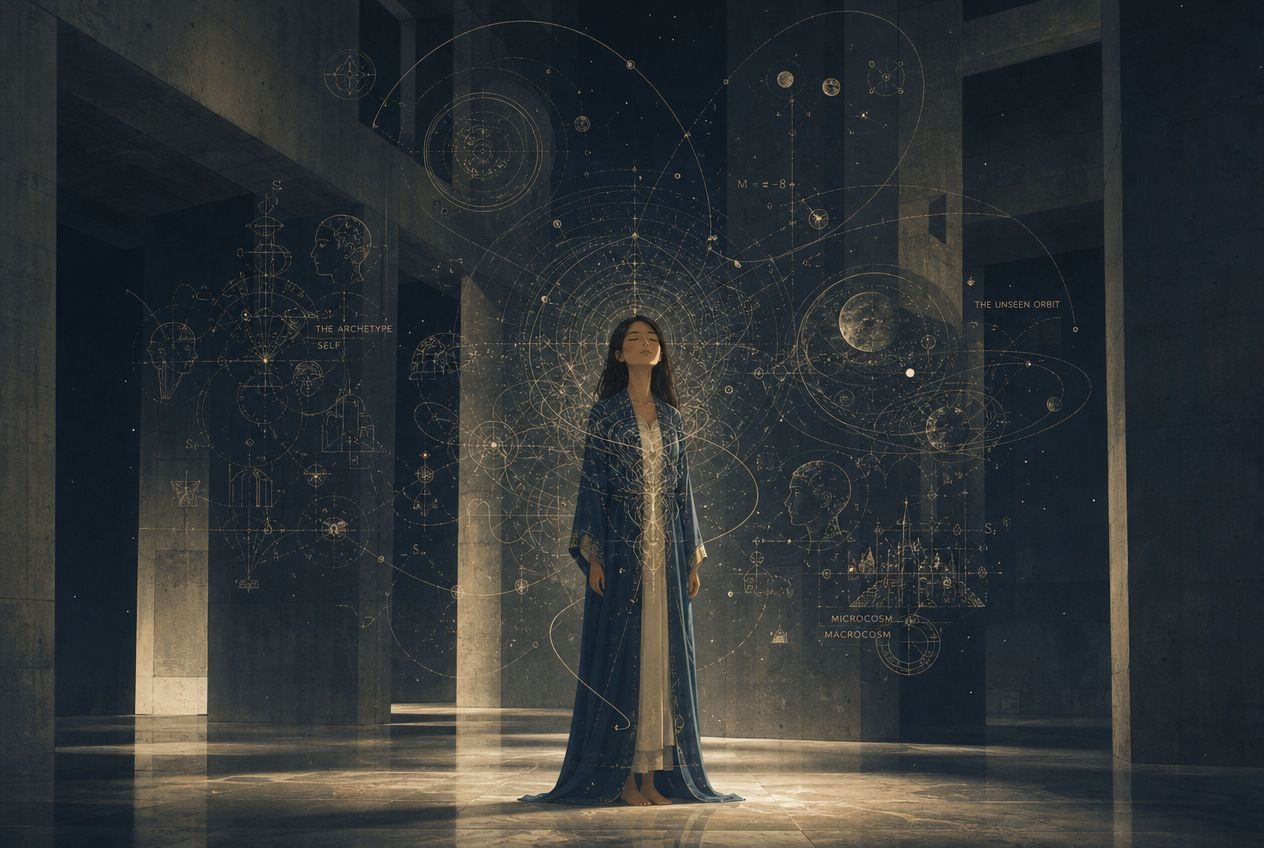
My journey toward a more expansive, soulful approach to self-inquiry didn’t begin in the therapy room—it began in my youth. As an introspective teenager growing up in India, I often felt disconnected from the conventional milestones that seemed to define success for many of my peers. While others focused on standard goals, I found myself preoccupied with deeper, existential questions about purpose, identity, and the human experience.
In that sense of isolation, I first turned to Vedic astrology. Rather than offering rigid certainty, it gave me a beautiful, symbolic language through which I could begin to understand my temperament, behavioral loops, and life experiences. At a time when few people around me could engage with the questions I carried, astrology became my framework for reflection—a way to explore myself with greater depth, compassion, and clarity.
At my core, I have always been a creative soul driven by a desire to help, to spread joy, to inspire love, and to create a meaningful impact in the world through my talents. I moved along a highly credentialed path to honor this calling—studying applied art, delving into psychology, earning my Master’s degree in Art Psychotherapy, completing certifications in CBT and Yoga, and eventually practicing as a clinical therapist in various hospital settings across Ireland.
Yet, over time, I began to feel that there is so much more to the human experience that makes people who they are. I realized that analyzing a client’s deep internal struggles within the narrow, rigid boundaries of standard clinical lanes was simply not sufficient. I had amassed a rich repository of academic knowledge and witnessed a vast spectrum of varied human experiences, and I knew I had more to offer than what a strictly conventional path allowed.
Years later, while on a parallel journey of self-discovery, I discovered Human Design. (Human Design is a personality assessment system that maps your unique energetic blueprint or “user manual”. It combines ancient traditions like astrology, the chakra system, Kabbalah, and the I Ching with modern sciences such as genetics.) It felt like a visceral homecoming. It gave me a clear, validating framework for my deep sensitivity, my natural tendency to nurture and support, and my unique way of operating in the world.
When I returned to India after my clinical training abroad, a quiet, terrifying lightbulb moment arrived; I felt a deep, undeniable gap in my practice. I asked myself: Why not use an additional tool to get a true, somatic feeling of what is happening inside a person, and why? Could I introduce astrology and Human Design to my clients, just as I had used them for my own self-understanding to get a wholesome picture and navigate the changing weathers of my life? After all, a tool can simply be a vehicle for resonance and remembrance.
It was a daunting decision initially to push those boundaries. But the bone-deep validation and personal sovereignty I had earned through these ancient, symbolic frameworks were too powerful to keep to myself. I resolved to let the conventional and the unconventional meet at the center—letting the work, and the feedback of my clients, speak for itself.
My Jungian foundation: Astrology as the soul’s blueprint
Once I started integrating these tools, I felt a profound sense of alignment, as if I were being gently directed into a vast, uncharted space where science and spirit could finally speak the same language.
A few months into this integrated practice, I found deep validation in the work of Swiss psychiatrist Carl Gustav Jung. Integrating astrology into psychological work is far from a modern novelty; Jung was among the first Western clinicians to recognize astrology as a brilliant, symbolic language capable of deciphering the labyrinth of the unconscious mind. He viewed the birth chart as a literal reflection of the psyche—a diagnostic map to understand an individual’s unique personality, behavioral loops, and core emotional wounds. As Jung famously observed:
“Astrology represents the sum of all the psychological knowledge of antiquity.”
Jung used astrology to inform his clinical understanding, proving that the chart is a highly credible pathway for profound self-inquiry. By bridging these two worlds, he paved the way for modern practitioners to use archetypal frameworks to help clients actively navigate their own healing with conscious, grounded self-awareness.

Understanding life’s seasons: Timing and personal cycles
To truly support someone, I believe we must look at them from multiple perspectives, honoring them as a whole, complex human being. This is where Western clinical psychology and Eastern wisdom meet in my practice. While modern psychology helps us understand our personality, behavioral patterns, and emotional wounds, Vedic astrology allows me to look at the larger, overarching blueprint of our soul’s journey. At their core, I’ve come to see that both psychotherapy and astrology share the exact same purpose—to make the unconscious conscious.
Instead of viewing life as a series of random, chaotic events, this combined lens helps us see our deeper development cycles as they ripen into fruition. This is where the real-time movement of the planets comes into play:
- Transits: The real-time movement of the planets and how they interact with your permanent birth chart today, acting as natural catalysts that trigger times of personal growth, unexpected challenges, or deep breakthroughs.
- Dashas: Time-tested Vedic predictive systems that grant a magnificent, bird’s-eye view of a person’s major life chapters, showing us how our deeper developmental cycles ripen over time.
When we become aware of these natural seasons, we can actively collaborate with the energy of the moment rather than exhaust ourselves fighting against it. This shifting of perspective moves us out of panic and into a space of intentional, empowered decision-making.
Many people look for this integrated approach when traditional therapy or standard predictive astrology feels a bit too rigid or limited. There is a deep sense of relief when you use a framework that respects your life’s unique chapters, timing, and personal rhythms—something this blended work is naturally designed to do.
Case study: This work in practice
The true power of this methodology is best understood through the real-world experiences of those who engage with it. Below is a reflection from a client who sought out this blended approach during a period of intense transition:
“At 21, I was struggling with fear, anxiety, confusion, and the uncertainty of my future. Job applications felt overwhelming, and watching my friends move ahead made me feel like I was living life on hard mode. I couldn’t understand why everything felt so difficult.
“I decided to book a Psychological Astrology and Human Design session with Rutika because I needed someone I could honestly share my thoughts and mental blockages with. I’d worked with her before and trusted her, but this approach was completely new to me. I had experienced traditional astrology, but I’d never come across anything that combined psychological insight with astrology and Human Design. I was curious, and it immediately resonated with me.
“What surprised me the most was how accurately she described what I had been experiencing. It genuinely felt like she was describing my life, my thoughts, and my struggles. More importantly, I never felt judged. I felt safe enough to open up, and that made all the difference.
“My biggest takeaway was simple: Act on the plan we discussed to make best use of this time. I realized that much of my fear existed in my mind and wasn’t as frightening as I’d imagined. Understanding through astrology that this phase of my life is meant to be one of preparation rather than visible rewards gave me immense clarity and reassurance. It helped me see that what I’m experiencing has a purpose and taught me to be patient.
“Since the session, I feel noticeably calmer. Rutika creates a space where you feel heard, understood, and supported. I find myself slowing down instead of constantly panicking about the future. It was a genuine, insightful, and truly worthwhile experience. I now understand myself better and feel more at ease with where I am in life.”
— Janki, 21
Reclaiming your inner compass
Janki’s experience captures the ultimate baseline philosophy of my practice: I do not sell quick, fatalistic answers. Instead, I help you build your own personal clarity so you can arrive at your own truth. No single framework or chart holds an absolute monopoly on who you are. The tools must always serve your lived human experience—never the other way around.
Ultimately, my work exists to help you navigate the beautiful, hard-earned process of coming home to yourself—truly knowing who you are, trusting your own instincts, and stepping back into your unique personal power.


Leave a Reply