



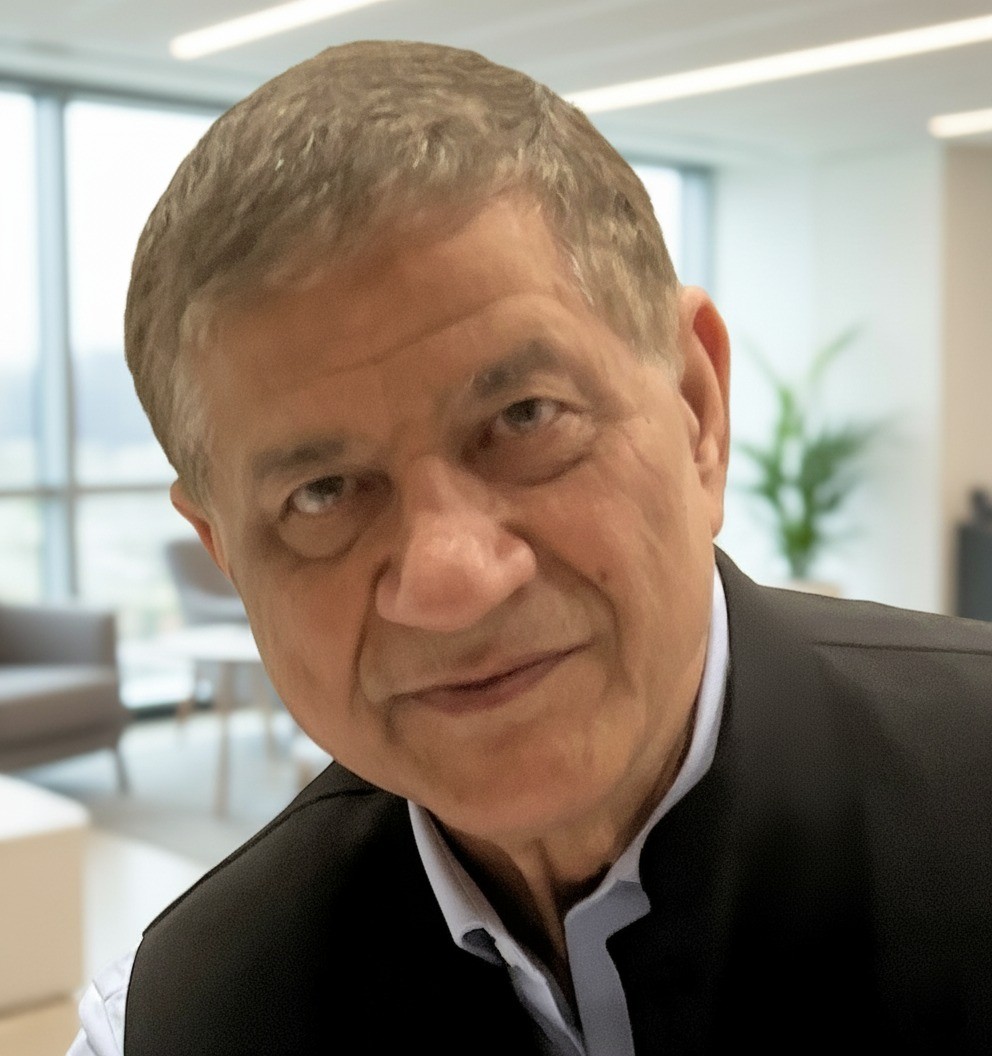
At A Lotus in the Mud, we seek out voices that blend inner stillness with outer impact. In this special conversation, we meet Chandra Pulamarasetti, founder of the Buddha-CEO Quantum Foundation, who has devoted his life to bringing the power of meditation into boardrooms and leadership spaces. Once a tech entrepreneur whose company was acquired by IBM, Chandra’s journey from software to soul work is a testament to how meditation can transform not only individuals but entire systems.
He spoke to Lotus at the successful Global Conference of Meditation Leaders — a landmark event hosted earlier this year by his foundation that united conscious leaders from around the world at the landmark Bharat Mandapam in Pragati Maidan, New Delhi. Lotus was there to support his mission as Digital Media Partner. Now, he is in the US, leading a Regional Conference of Meditation Leaders in St. Louis, MO (July 26-27) and the Mega Meditation Summit in Lawndale, CA (August 30-September 1), as well as programs in other cities over the next month and a half.
Through his work with Buddha-CEO and the global Pyramid Meditation movement, he continues to bridge ancient wisdom with modern technology, opening doors for individuals, corporations, and communities to lead more mindful, empowered lives.
Excerpts from the interview:
Parveen Chopra: You’ve long been associated with meditation, but what stands out is how you’ve merged it with leadership. What led you to connect these two worlds?
Chandra Pulamarasetti: Thank you, Parveenji. My journey began in 1999, inspired by my elder brother and deepened under the guidance of Brahmarshi Patriji, a visionary who taught meditation as a scientific process. I was in my early 30s and initially skeptical, but I committed to a 40-day practice, and the results were transformative. Long-standing back pain disappeared, stress dissolved, and life began to feel effortless. My environment shifted; people became more cooperative, and outcomes began aligning with my intentions.
That personal transformation made me realize meditation is a powerful science of the mind and energy. It enhances health, emotional balance, and mental clarity. As someone running a software company at the time, I began applying meditative principles to leadership, intuition, calm decision-making, and compassionate action. These tools helped lead my company to success, including an eventual acquisition by IBM.
Over time, I felt a growing sense of calling to serve more directly. I founded the Buddha-CEO Quantum Foundation to bring meditation to leaders — those with influence and resources — so they can lead not just with intellect, but with inner stillness. We’re helping shift the paradigm from high-stress leadership to conscious, compassionate leadership, rooted in science rather than belief.

Parveen Chopra: You’ve taken Buddha-CEO to over 35 countries, reaching more than 300,000 people, including organizations like Cognizant and Star Health. What challenges have you faced in bringing meditation to a global audience, and how do you adapt it for corporate use?
Chandra Pulamarasetti: Our journey started formally in 2020, but our outreach has now touched over 300,000 individuals through online and in-person programs. The challenge of going global was made easier because the meditation technique we teach is profoundly simple and deeply scientific.
What works universally is simplicity. Observing the breath, with eyes closed, is the core technique. As Patriji often said, “Your breath is your guru.” This method requires no rituals, postures, or even a teacher in the room. It can be self-taught — even through a video — making it easily accessible worldwide, especially via online platforms.
In the corporate world, we tailor the experience by grounding it in science. We explain how meditation enhances neuroplasticity, cognitive agility, emotional balance, and resilience — all of which are essential for modern workplaces. For companies, we address key pain points, including low engagement, burnout, and a lack of reskilling. Meditation helps rewire the brain to embrace change and growth.
We also introduce the concept of coherent energy fields — how meditation shifts individuals from a state of lack to one of creative manifestation, aligning with the principles of quantum science. This builds purpose-driven focus, which leaders value.
Our delivery is flexible: short, bite-sized sessions of 45–60 minutes; self-paced modules for easy access; and practices done right at the desk — no mats, no special dress, no elaborate setup. Meditation becomes a shared, empowering experience, integrated into the work culture, rather than a private practice.
This approach has helped organizations move from stress to clarity, from disengagement to innovation — one breath at a time.

“Meditation isn’t just for peace – it’s a power tool for conscious leadership, productivity, and purposeful impact. Even 15 minutes a day can shift your brain, boost your clarity, and unlock your leadership potential.”
~ Chandra Pulamarasetti
Founder of Buddha-CEO Quantum Foundation
Parveen Chopra: As someone who has taught thousands globally, how do you envision meditation shaping the next generation of mindful leaders, and what advice would you offer young people seeking to integrate it into their personal and professional lives?
Chandra Pulamarasetti: Yes, challenges are universal — but so is the solution. Meditation is that timeless, transformative tool that equips us to face life with clarity, resilience, and inner power. For the younger generation, especially, starting early makes a world of difference. I often think: if I had learned to meditate in school or college, my journey would have been much different. The emotional setbacks, confusion, or disappointments of youth could have been navigated with far more ease and confidence.
For young people today, meditation is not just about stress relief — it’s about unlocking their highest potential. It empowers them to live fully, create consciously, and move from confusion to clarity. The beauty is that they don’t need to dedicate hours to it — even 15 to 20 minutes a day can yield profound benefits.
My advice? Don’t overthink it — experiment! Try it sincerely for three weeks. Let the results speak for themselves. Meditation boosts self-belief, enhances focus, and ignites the power to manifest one’s dreams. Icons like Steve Jobs began their careers at a young age and credited meditation as a pillar of their success.
Meditation helps you lead, not just live. It builds mindful leaders who are grounded, visionary, and compassionate. Start now — your future self will thank you.

Parveen Chopra: Patriji founded the Pyramid Spiritual Societies Movement, and your center in Bangalore is called Pyramid Valley. Is there really something special about meditating inside pyramids? Do they actually help deepen the practice?
Chandra Pulamarasetti: Absolutely. Pyramids aren’t just symbolic —they’re energetic amplifiers. Scientific experiments from both the East and the West have shown that pyramids harness and channel energy in a unique manner. Meditating inside a pyramid significantly deepens the experience. Beginners can slip into thoughtlessness more easily, and advanced meditators access deeper, altered states of consciousness.
When Patriji discovered this, he was inspired to build meditation halls in pyramid shapes — not for aesthetic reasons, but for their energetic advantages. If you’re going to build a hall, he reasoned, why not make it naturally supportive to the meditator?
Today, these pyramid structures serve as secular sanctuaries for all. Since they don’t resemble any traditional religious buildings — such as a mosque, church, or temple — they feel inclusive. People from all walks of life and all faiths are drawn in, and once inside, they feel the tangible shift. Pyramid meditation halls are becoming temples of inner transformation, powered by both structure and spirit.
Parveen Chopra: You’ve already integrated technology into spreading meditation. Are you planning to launch meditation apps or other digital platforms to make it even more accessible and impactful for a wider audience?
Chandra Pulamarasetti: Yes, Parveenji, absolutely. Technology plays a key role in making meditation universally accessible. While in-person teaching has its charm, it’s limited by geography and time. That’s why we’re investing heavily in digital tools.
We already have dedicated Pyramid Meditation channels broadcasting 24/7, helping people around the world learn and practice. Our Buddha-CEO app, offered completely free as part of our non-profit mission, enables anyone, anywhere, to begin their meditation journey with guided sessions and AI-driven support.
We’re also launching a corporate-focused app called Be Supermind, developed in partnership with Quantum Coherence, to help solve specific workplace challenges like stress, engagement, and upskilling through meditation.
Beyond that, we’re designing structured, self-paced online courses that can train individuals to become meditation coaches. This allows rapid expansion without dependency on a central organization.
Importantly, we are working with policymakers to embed meditation into formal systems — like universities, corporate skill development programs, and even government wellness initiatives — so it becomes a recognized, credit-based life skill.
More about Buddha-CEO Quantum Foundation: https://www.buddhaceo.org/
Leave a Reply