


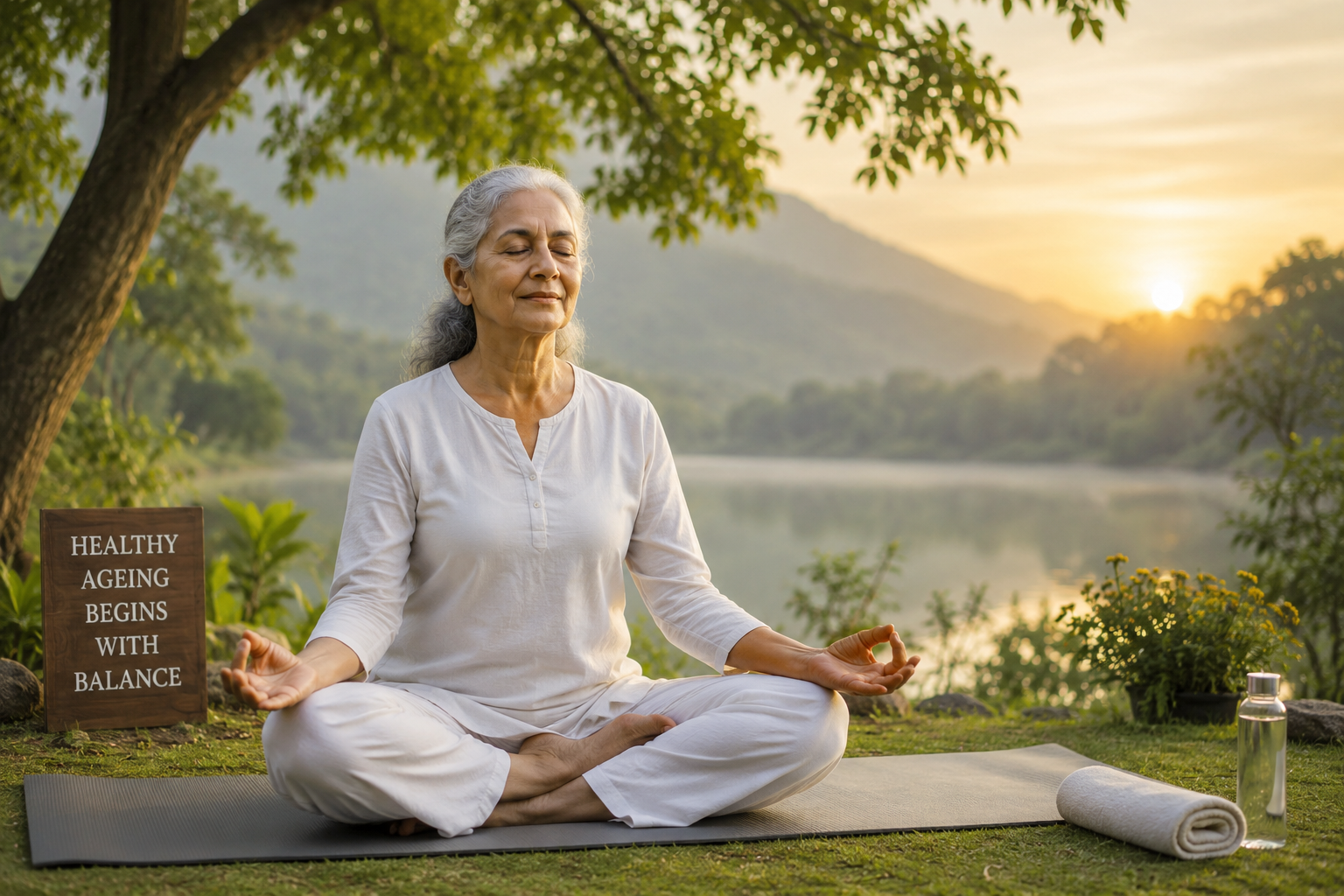
“Yoga for Healthy Aging” is the clarion call for the International Day of Yoga (IDY) 2026, a global initiative that has gathered unprecedented momentum since its inception in 2014. What began as a proposal at the United Nations by Indian Prime Minister Narendra Modi has evolved into a worldwide wellness movement, with more than 180 countries now marking June 21 with yoga sessions, workshops, and community events.
Yet amid the mass gatherings and social media campaigns, a fundamental question remains: Can yoga truly help people age better?
Can yoga help us age better?
India’s Ministry of Ayush believes the answer is yes. By choosing “Yoga for Healthy Aging” as the theme for the 12th edition of IDY, the ministry has turned the spotlight on a challenge facing societies across the world: how to ensure not just longer lives, but healthier, more active, and dignified ones.
At a recent interaction with the media in New Delhi, ministry officials said yoga could play an important role in improving physical mobility, mental well-being, and emotional resilience among older adults.
Ageing gracefully, the yogic way
For Radhika Iyer Talati, founder of Anahata Organic and the RAA Foundation, healthy aging is as much about mindset as it is about physical well-being.
“Yogic living teaches us that aging is not something to fight but something to embrace consciously. I’ve realized that true vitality has less to do with how young we look and more to do with how connected we feel—to ourselves, to others, and to life itself,” she told A Lotus In The Mud.
Radhika says that from a yogic perspective, healthy aging is not about resisting the passage of time.
“It is about moving through life with greater awareness, balance, and inner freedom. Our culture often measures aging by external markers, but yoga invites us to look deeper.”
“It asks, are we becoming more peaceful? More connected to ourselves? More accepting of life’s changes?” says Radhika, who, after battling cancer twice, turned to the Himalayas for healing. Her journey through yoga, Ayurveda, and naturopathy inspired the creation of Anahata Organic.
Her views coincide with a philosophy that has existed for centuries.

Ancient wisdom meets modern science
Yoga has been part of India’s civilizational heritage for over 5,000 years. In recent decades, however, modern science has also begun examining its benefits more closely.
The United States National Library of Medicine, the world’s largest medical library, describes yoga as an ancient Indian holistic mind-body discipline and notes that it is recognized by the National Institutes of Health as a form of complementary medicine.
Research over the years has linked yoga-based lifestyle interventions with a range of health benefits, including improved flexibility, better balance, reduced stress, and an enhanced quality of life.
For older adults, these benefits can translate into something invaluable: greater independence, confidence, and engagement with everyday life.
More than a one-day trend?
Yet another question remains. While millions take part in Yoga Day celebrations every year, has yoga become a one-day event, or are people embracing it as a long-term practice?
“I believe it is a combination of both. International Day of Yoga has definitely helped emphasize the importance of yoga and raise awareness about it on a global scale,” said Mumbai-based 27-year-old Simran Bhana.
A certified yoga instructor from Kaivalyadhama, the oldest Scientific Yoga Research Institute in the world, which was founded by Swami Kuvalayananda in 1924, Simran believes that even a single yoga session can open the door to something bigger.
“Even if an individual first engages with yoga through a one-day event or starts yoga for the physical benefits, it can possibly be the beginning of a meaningful journey,” she said.
According to her, what keeps people coming back is the impact yoga has on daily life.
“What makes people continue with yoga is the positive impact it has on their lives — understanding others’ perspectives, regulating emotions and improving their quality of life,” she said.
Shagufta Khan’s experience echoes that view.
“I have been practicing yoga since college, on and off, though not always regularly, and I’ve seen many benefits from it. Yoga has helped me in many ways, especially after childbirth,” said the young mother.
“I used to suffer from back pain and knee pain, but yoga helped me overcome them. I am really thankful to my yoga teacher, and I truly enjoy practicing yoga,” she said.
Beyond the yoga mat
Stories like hers suggest that yoga’s appeal goes well beyond a single day of celebration.
For many yoga practitioners, healthy aging goes far beyond physical fitness.
In fact, with a growing number of yoga institutes, instructors, and wellness centers across the world, yoga appears to be firmly rooted in modern life.
Simran believes it is far more than a passing trend.
“People are embracing yoga as a long-term practice rather than a fitness trend. People have become increasingly aware of stress management, the importance of maintaining good health, mindfulness, and overall well-being, and yoga naturally addresses all these areas,” she said.
As nations across continents prepare to celebrate International Day of Yoga on June 21, the focus this year extends beyond performing postures on a mat. It is about redefining aging itself—not as a period of decline, but as a stage of life that can be lived with vitality, purpose, and well-being.
In that sense, the question may no longer be whether yoga helps healthy aging. The real question is how many more people can benefit from making it a part of their lives.

Leave a Reply