



We live in a world saturated with the noise of conflict, division, and despair. The headlines are heavy—wars rage, injustices endure, and the planet cries out under human impact. Yet, amidst this cacophony, we find ourselves drawn to the enduring, quiet power of hope. This isn’t a naive distraction from reality; it is, I want to demonstrate, the most profound form of ethical action.
Ethical Humanism — the belief in human dignity and moral clarity—provides the foundation for this essential resistance. For decades, I’ve seen how this foundation holds true, from the foothills of the Himalayas to the hospitals and interfaith dialogue centers right here on Long Island in New York.
The Weight of Reality: Acknowledging the Turmoil
To embrace hope, we must first look unflinchingly at the turmoil:
- Global Conflicts: From my birthplace in Kashmir, where the 1947 partition of India led to prolonged conflict and the haunting reality of ‘half widows’ (women who do not if their disappeared husbands are alive) to the genocide in Gaza we witnessed, the displacement of millions is a fact.
- Economic Inequality: A visit to Oaxaca, Mexico, starkly revealed the devastating human cost of US policy. The North American Free Trade Agreement (NAFTA) undercut small farmers, forcing able-bodied men to migrate north, leading to the “huge influx of ‘illegal’ migrants on LI.” As President Clinton noted in 2000: “5% population consumes 30% resources… It is in our interest to support ‘have nots’—we can’t live in a castle, be surrounded by slums.”
- Climate & Social Erosion: From the 2014 Kashmir floods to the frequent natural disasters globally, the climate crisis is a direct threat. Simultaneously, deep social divisions—racial, political, and ideological—actively erode the trust and empathy required to solve these global crises.
These are not abstract issues; they demand an ethical response that transcends cynicism.
Hope as a Moral Stance and Ethical Clarity
What, then, is hope in this context? It is not blind optimism or denial. It is a moral stance—a commitment to envision and work toward a better future, even when the odds feel insurmountable.
My own journey, rooted in my practice as a Muslim, has consistently reinforced this active, engaged definition of hope. When faced with complex ethical questions, such as the definition of brain death in Islam, I followed the required process:
- Consulting the Quran.
- Examining the Hadith (Prophetic tradition).
- Seeking Ijma (consensus/consultation).
- Applying Personal Opinion (Ijtihad).
This ethical process, applied to life’s most challenging questions—from medical ethics to terrorism, Islamophobia, and anti-Semitism—is itself an act of hope. The belief is that reason and moral reflection can illuminate the path forward.
From Hardship to Ease: A Personal Testimony
My professional life has offered a powerful illustration of the Quranic promise: “For indeed, with hardship [will be] ease” (Quran 94:5).
In March 1999, after successfully serving 12 years as Chairman of Medicine at Nassau University Medical College (NUMC), improving board pass rates from 33% to 95% and leading major research projects, my contract was not renewed—a move many suggested was influenced by my rising public profile as a Muslim.
What followed was extraordinary: I was invited to Riyadh, Saudi Arabia, and ultimately helped establish the first research center at the King Fahd Medical City, secured training for 100 nursing students from the Bibi Halima Nursing College in Kashmir, and founded the first American College of Physicians (ACP) chapter in the Middle East. My termination from NUMC became, in retrospect, a blessing—a clear demonstration that “with hardship, come ease.”

To hope is to say: “I will not be numbed.”
To hope is to say: “I will not abandon others.”
To hope is to say: “I believe in the possibility of change.”
The Sources of Active Hope
Hope is an inner wellspring that can be cultivated from three essential sources:
- Memory: We remember moments when humanity rose above its worst instincts: the Civil Rights Movement, acts of profound compassion, and even the moments of quiet dignity during the 1947 Kashmir partition.
- Imagination: We practice ethical imagination, allowing us to dream of justice, healing, and renewal. It enables us to see beyond the present reality and to conceive of a world healed of prejudice and inequality.
- Action: We engage. Even the smallest acts—listening deeply, showing kindness, standing up for truth—are seeds of hope.
Building Bridges: The Interfaith Journey
The journey that led to the Interfaith Institute of Long Island began with a moment of profound ignorance. In 1984, a colleague asked me, “Do you guys (Muslims) believe in prophet Jesus?” That question, posed by a dean of a medical school, fueled a drive to combat widespread misunderstanding of Islam.
With crucial assistance from Rabbi Jerome Davidson, we launched award-winning dialogues, including American Muslims and Jews in Dialogue (AMJID), and the television show Our Muslim Neighbor. This was not a passive acceptance of difference; it was an active, hopeful commitment to bridge-building.
The Holy Land delegation I led in 2006 with Catholic, Jewish, and Muslim high school students highlighted both the challenge and the necessity of this work. After a harrowing interrogation at the Tel Aviv airport—triggered by intelligence that I was a “BIG fish” bringing funds to Hamas—I witnessed firsthand the treatment of Palestinians: separate roads, checkpoints, and segregated resources. The conclusion was clear: No justice, no peace.
A Call to Action: Hope as Resistance
Ethical Humanism is not passive; it rejects cynicism and nihilism. Your philosophy is engaged and insists that meaning is made through ethical living. Therefore, in times of turmoil, hope becomes a form of resistance:
- To hope is to say: “I will not be numbed.”
- To hope is to say: “I will not abandon others.”
- To hope is to say: “I believe in the possibility of change.”
This resistance requires us to understand our interconnectedness. The dissolution of USAID this year has had a devastating impact on global health in Africa, Asia, and elsewhere. The story of Karmi Kumari, who arrives at a medical facility in a small Indian village with broken water only to find no staff due to funding cuts, is a direct consequence of our collective choices. Global conflicts like Kashmir, Bosnia, and Gaza demand more than passive observation; they demand our involvement.
Let us be the carriers of hope. Not because we are certain of success, but because we are committed to meaning and to justice. We face the world as it is, and still, we believe in what it could be. As Robert Reich, an eminent commentator on political and economic issues, recently noted, when people start to fight back and push for change, there is a reason to be hopeful.
Insha Allah (God willing).
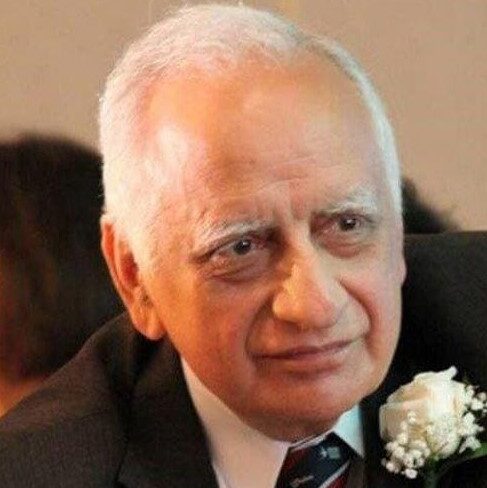
This article is edited from a talk Dr Faroque Khan gave at the Ethical Humanist Society of Long Island in Garden City, NY, in early September 2025.
Leave a Reply