


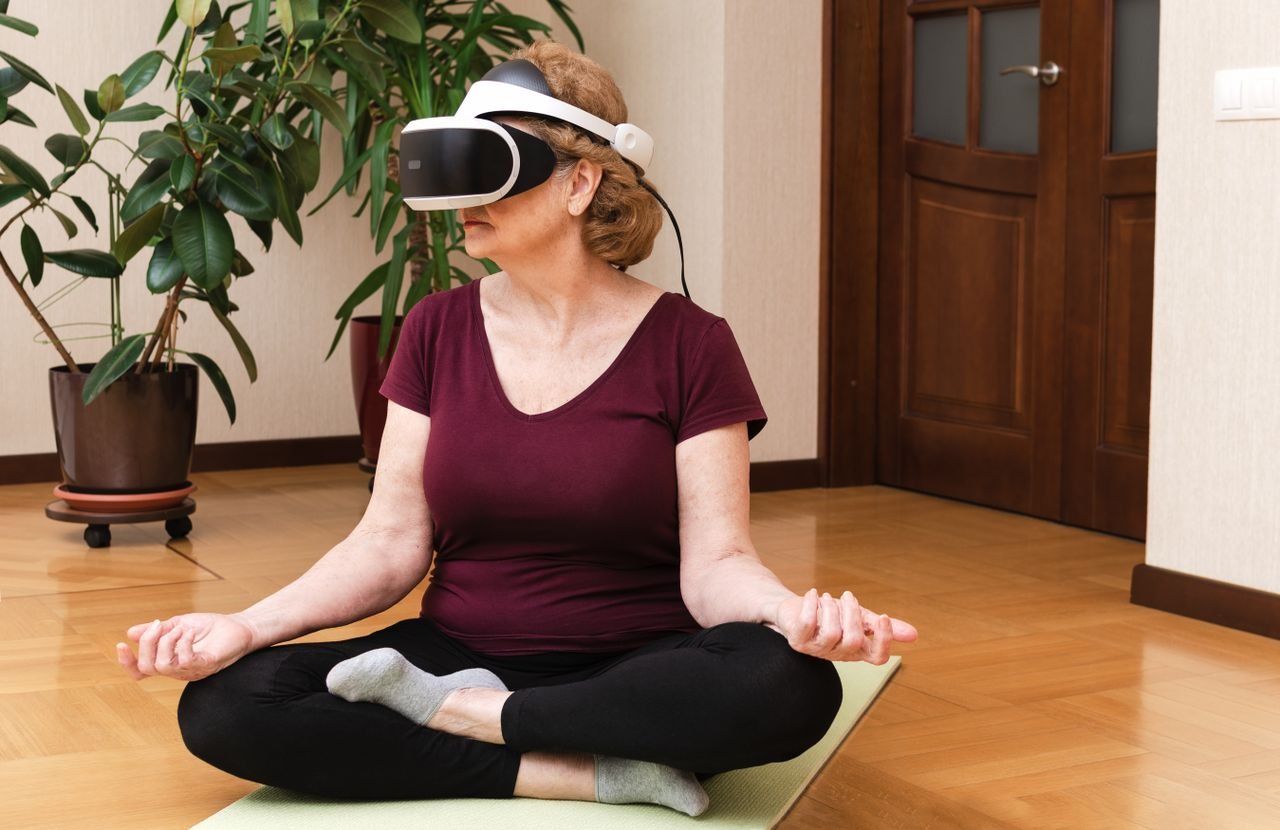
Meditation has travelled for more than 3,500 years—from 1500 BCE to the Fourth Industrial Revolution, an era ruled by artificial intelligence (AI). Throughout this journey, it has remained one of the most reliable practices for reducing stress and cultivating mental well-being.
Meditation is inherently flexible; it has always found a way to adapt to changing lifestyles. True to its adaptable nature, it has now joined hands with AI, blending ancient wisdom with technology.
So, what is AI doing in the tranquil world of meditation?
Well! From AI-powered meditation apps to large language models that generate customized mindfulness exercises in seconds, artificial intelligence is reshaping how millions of people meditate.
It offers personalized meditation sessions, adaptive coaching, progress tracking, and even conversations resembling guidance from a human mindfulness teacher.
The question, however, is bigger than convenience: Can AI actually improve mindfulness, or is it simply a more sophisticated delivery system for guided meditation?
Meditation works—with or without AI
Before examining AI’s role, it is important to understand what science already knows about meditation.
Meditation, an ancient Indian practice that emerged from the Vedas, was introduced to the West by Swami Vivekananda during his address to the 1893 Parliament of the World’s Religions in Chicago. This laid the groundwork for Eastern spirituality in America.
More than a century later, meditation has become a global wellness practice.
Research has linked meditation with lower stress, anxiety, depression symptoms, and emotional reactivity while improving attention and psychological well-being.
Clinical studies also suggest that even brief daily practice can be effective, with consistency appearing to matter more than the length of an individual session.
A 2023 study published in Scientific Reports found that both 10-minute and 20-minute mindfulness sessions significantly increased participants’ mindfulness compared with a control group. Surprisingly, longer sessions did not consistently outperform shorter ones, suggesting that consistency may matter more than duration.
The evolution of digital meditation
Over the past decade, smartphone meditation apps have transformed how people access and practice meditation.
Meditation entered the app economy in 2011 with platforms such as Headspace and Calm. Although adoption was gradual, the market expanded rapidly between 2015 and 2020, with more than 2,500 meditation apps launched and millions of users embracing digital mindfulness.
Traditional meditation apps vs AI-powered apps
Traditional meditation apps largely offer libraries of pre-recorded, generic guided sessions. AI-powered meditation and therapy apps, however, generate or adapt content in real time, providing personalized guidance, adaptive coaching, and feedback based on users’ needs and responses.
This shift has expanded access to meditation. Today, the top 10 meditation apps account for more than 300 million downloads, far exceeding participation in traditional in-person meditation programs.
Traditional meditation apps act as digital libraries of guided meditations, whereas AI-powered meditation apps function more like personal mindfulness coaches, creating or adapting meditation experiences in real time based on individual needs.
| Traditional meditation apps Vs. AI-powered meditation apps | ||
| Feature | Traditional Apps | AI-Powered Apps |
| Content | Pre-recorded guided sessions | Generates or adapts sessions in real time |
| Personalization | Users choose from a fixed library | Tailors sessions to suit users’ goals, mood and needs |
| Guidance | Same steps for everyone | Customized guidance based on user inputs |
| Interaction | One-way listening experience | Conversational with interactive coaching |

Can AI improve meditation outcomes?
Researchers are now examining whether AI can improve meditation outcomes or simply deliver guided meditation in a more personalized way.
Personalization may be AI’s biggest advantage. Traditional meditation apps ask users to choose from a catalog of sessions. AI can instead respond to a user’s changing needs. It can also adjust the duration, tone, and type of meditation without requiring new content to be recorded. Researchers believe this flexibility could help users maintain a regular meditation practice, an area where many conventional meditation apps struggle.
One study reveals that unlike traditional meditation apps that rely on pre-recorded, one-size-fits-all sessions, generative AI can create personalized mindfulness exercises in real time based on a user’s preferences, goals, and emotional needs.
This allows meditation sessions to be adapted in terms of length, theme, and style, making them more flexible and engaging.
The researchers also note that AI can make mindfulness support more accessible and scalable by generating unlimited guided exercises on demand, reducing the time and resources needed to produce new content. As a result, AI has the potential to expand access to personalized mental well-being support through meditation apps and digital health platforms.
Early evidence suggests that AI may do more than simply make meditation more convenient. A 2026 study by researchers at the CHI Conference on Human Factors in Computing Systems found that an AI system called MindfulAgents generated meditation sessions tailored to users’ emotions, experience levels, goals, and context.
Participants said that the AI-generated sessions felt more relevant to their needs. The study also found improvements in user engagement, self-awareness, and mindfulness, along with reduced momentary stress, suggesting that AI-driven personalization could help people sustain a regular meditation practice more effectively than traditional, pre-recorded sessions
The researchers also observed higher engagement over time, suggesting that AI-driven personalization may help people build a more consistent meditation habit—a challenge that many traditional meditation apps continue to face.
Beyond the hype
The evidence so far suggests AI can strengthen meditation practice, but the research is still in its early stages. While early research points to improvements in user engagement and mindfulness through personalized guidance, questions about effectiveness, safety, privacy, and ethical use remain. As AI continues to evolve, its role in meditation will depend not only on technological advances but also on scientific validation and responsible implementation.

Leave a Reply