
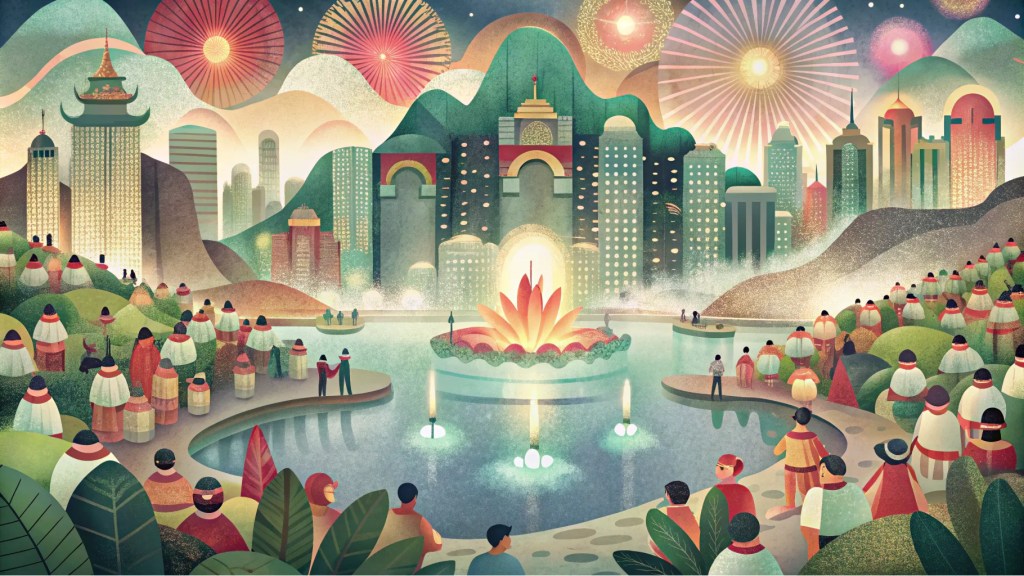


For centuries, spirituality and religion have been deeply intertwined, with religious institutions serving as the primary pathways for people seeking spiritual fulfillment. However, in recent years, spirituality has been expanding beyond traditional religious frameworks, evolving into a more personal, inclusive, and diverse experience. Today, more people identify as “spiritual but not religious” (SBNR), embracing spirituality in ways that transcend organized faith. This shift raises important questions: What is driving this transformation? How are people redefining spirituality? And what implications does this expansion have for society?
The decline of organized religion
One of the most significant factors contributing to the expansion of spirituality beyond religion is the declining influence of organized religious institutions. Across many parts of the world, particularly in the West, church attendance and formal religious affiliation are decreasing. Studies show that younger generations, in particular, are less likely to identify with a specific religious denomination than their predecessors.
This shift does not necessarily mean that people are abandoning spirituality altogether. Instead, they are seeking new ways to connect with a sense of purpose, meaning, and the divine outside of traditional religious structures. The reasons for this decline in religious affiliation are varied and include:
- Skepticism toward institutions: Many individuals have become disillusioned with religious institutions due to scandals, corruption, or rigid dogma.
- Desire for personal exploration: Traditional religions often prescribe specific beliefs and practices, while many individuals today prefer to explore spirituality on their own terms.
- Scientific advancements: As scientific understanding grows, some traditional religious explanations about the universe and human existence have been challenged, leading some to seek spiritual perspectives that integrate science and philosophy.
The rise of personalized spirituality
As traditional religious adherence declines, many people are embracing spirituality in more personal and eclectic ways. Rather than adhering to a single religious doctrine, individuals are drawing from multiple traditions, philosophies, and practices to create a spiritual path that resonates with them. Some key aspects of this personalized spirituality include:
- Meditation and Mindfulness: Practices such as meditation, breathwork, and mindfulness—often derived from Eastern spiritual traditions—have become mainstream. These practices help individuals cultivate inner peace, awareness, and a connection to something greater than themselves without adhering to a religious faith.
- Nature-Based Spirituality: Many people find spiritual fulfillment through nature, seeing the Earth as sacred and embracing ecological awareness as a spiritual practice. This includes practices such as forest bathing, grounding (walking barefoot on the earth), and honoring the cycles of nature.
- Energy Healing and Holistic Wellness: Practices such as Reiki, chakra healing, and sound therapy have gained popularity as individuals seek spiritual and energetic balance. These methods often blend ancient traditions with modern wellness approaches.
- Sacred Plant Medicine: Psychedelic experiences using plant medicines such as ayahuasca, psilocybin, and peyote are increasingly being explored for their spiritual and transformative potential. Many view these experiences as a way to access higher states of consciousness and personal healing.
- Astrology and Mysticism: Interest in astrology, tarot, and other mystical practices has surged, offering individuals tools for self-reflection, guidance, and connection to a broader cosmic order.
- Interfaith and Universalist Perspectives: Rather than identifying with a single religious tradition, many people incorporate teachings from multiple faiths, seeking common spiritual truths rather than exclusive dogma.

Rather than following a single religious doctrine, people are blending meditation, nature-based rituals, energy healing, and astrology to create spiritual paths that feel authentic and meaningful to them.
Spirituality in the digital age
The internet and social media have played a crucial role in expanding spirituality beyond religion. Digital platforms allow people to explore spiritual ideas, connect with like-minded individuals, and access resources that were once limited to specific religious communities.
- Online Spiritual Communities: Social media platforms, forums, and virtual gatherings provide spaces where individuals can share spiritual experiences, seek guidance, and engage in discussions about consciousness and personal growth.
- Access to Global Wisdom: The internet has made it easier than ever to access teachings from various spiritual traditions, allowing individuals to learn from Buddhism, Sufism, Taoism, and indigenous wisdom traditions without having to adhere to a single faith.
- Spiritual Influencers and Teachers: Many spiritual teachers, authors, and influencers share insights through podcasts, YouTube channels, and online courses, making spiritual knowledge more accessible to a global audience.
The role of science in spirituality
While science and spirituality were once seen as opposing forces, there is now a growing movement toward integrating the two. Neuroscience has shown the benefits of meditation and mindfulness on the brain, lending scientific credibility to practices traditionally associated with spirituality. Quantum physics has also sparked philosophical discussions about consciousness, reality, and interconnectedness, leading some scientists and spiritual seekers to explore new ways of understanding existence.
Moreover, fields such as transpersonal psychology examine the intersection of psychology and spirituality, exploring how spiritual experiences contribute to mental well-being and personal transformation.
The challenges of expanding spirituality
While the expansion of spirituality beyond religion offers many opportunities for personal growth and inclusivity, it also presents certain challenges:
- Lack of Community Support: Traditional religious institutions provide a built-in community and support system. Personalized spirituality can sometimes feel isolating, as individuals may not have the same communal connections.
- Commercialization of Spirituality: The rise of the wellness industry has led to the commercialization of spiritual practices, with some critics arguing that spirituality is being packaged and sold rather than genuinely cultivated.
- Risk of Misinformation: With the abundance of spiritual content available online, there is also a risk of misinformation, with unverified or misleading teachings gaining traction.
- Superficiality vs. Depth: Some critics argue that picking and choosing spiritual elements without deep study or commitment can lead to a shallow understanding rather than meaningful transformation.

Social media and online communities have made spiritual wisdom more accessible than ever, allowing people to explore teachings from Buddhism, Sufism, and indigenous traditions without committing to a single faith.
The future of spirituality
As spirituality continues to evolve, it is likely to become even more diverse and inclusive. Spirituality is expanding beyond religion in profound ways, reflecting a shift toward a more individualized, inclusive, and eclectic approach to meaning and transcendence. While traditional religious institutions still play a role in many people’s lives, the modern spiritual landscape is becoming increasingly fluid, integrating elements from multiple traditions, scientific discoveries, and personal experiences.
- Greater Integration of Science and Spirituality: More research into consciousness, the mind-body connection, and the impact of spiritual practices on well-being.
- Emergence of New Spiritual Communities: While traditional religious institutions may decline, new forms of spiritual communities – both online and in-person—may emerge to provide connection and shared purpose.
- Expanding Definitions of the Divine: Rather than seeing divinity in a traditional religious sense, more people may embrace a broader, more fluid understanding of the sacred, incorporating concepts like universal energy, cosmic consciousness, or collective human potential.
- Ethical and Socially Conscious Spirituality: As people seek meaning in a changing world, spirituality may become more connected to activism, environmentalism, and social justice, emphasizing compassion and collective well-being.
As this transformation continues, the challenge will be to maintain depth, authenticity, and ethical integrity while embracing the freedom and openness that a broader spiritual perspective allows. Whether through meditation, nature, energy healing, or mystical exploration, the human search for connection and purpose remains as strong as ever – just taking new and evolving forms.
Also read: https://alotusinthemud.com/so-what-is-spirituality/

Leave a Reply