


Mindful Musings
Ritu Chopra
This is in a series of articles by executive coach Ritu Chopra. She supports professionals across age groups by integrating interpersonal acuity with exposure to global workplace methodologies, drawing on her leadership experience to influence organizations of every scale.
Few ideas have become as commonplace in life as gratitude. It finds its way into morning routines, journal prompts, wellness apps, and endless reminders to “count our blessings.” Many people keep gratitude lists or pause at the end of the day to reflect on what went well. Such practices can be valuable, gently shifting our attention toward appreciation rather than complaint.
And yet gratitude is easier to talk about than practice.
There are days when life feels heavy, uncertain, or simply exhausting. In those moments, being told to “just be grateful” can feel less like comfort and more like pressure.
True gratitude does not ask us to deny pain or pretend everything is fine. It asks us to look inward and find clarity even in the midst of difficulty.
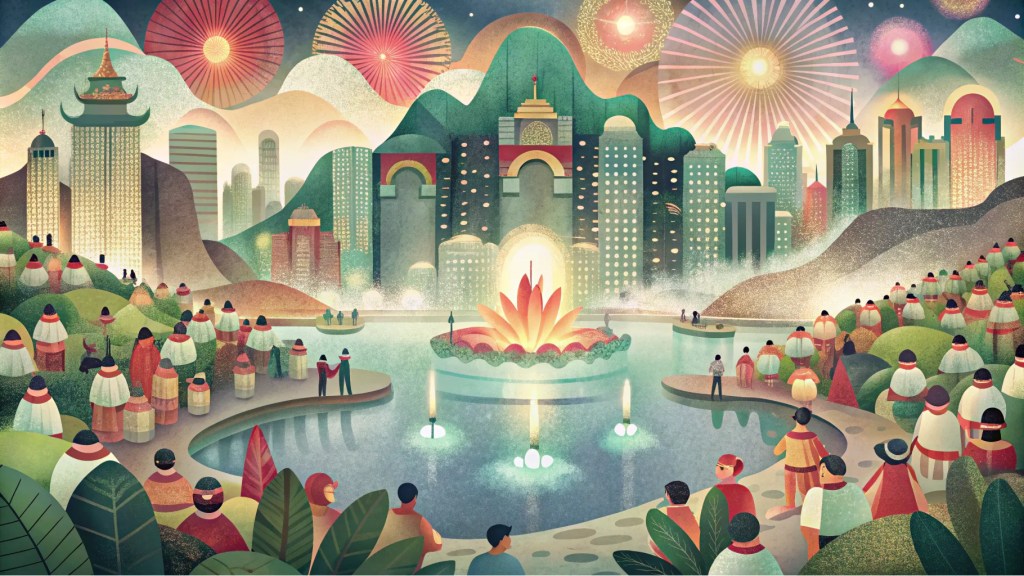
In the spirit of Lotus in the Mud, gratitude is not about pretending life is always beautiful. It is about recognizing that, even in complicated seasons, something meaningful remains.
Like the lotus that blooms from the depths of muddy waters, gratitude grows through the conditions of life, not apart from them.
The difference between ritual and realization
Rituals can open the door to gratitude, but they are not the same as gratitude itself.
Writing a list of things we appreciate can be a fruitful practice. It gently encourages the mind from what is lacking to what is present. But gratitude becomes transformative only when it moves from a mental exercise to a felt experience.
Real gratitude has a certain quality.
It softens the body. It quiets the mind. It creates a subtle sense of enoughness.
This kind of gratitude cannot be manufactured on demand. It arises when awareness settles long enough to notice what is already present. These moments may seem small, yet they carry a quiet power.
“Gratitude is not pretending life is beautiful. It is recognizing beauty while life remains imperfect.”
Why gratitude sometimes feels difficult
From a psychological perspective, the human brain is wired to notice what is wrong before what is right.
This tendency, known as negativity bias, evolves as a survival mechanism. Our ancestors survived by paying attention to threats rather than by dwelling on pleasant experiences. In modern life, this same mechanism can cause the mind to focus heavily on problems, frustrations, and unfinished tasks.
Gratitude does not deny this tendency. Instead, it gently balances it.
When attention expands to include what is working, what is supportive, and what is quietly sustaining us, the nervous system begins to relax. And, when attention anchors in the present moment, the mind slows down enough to see more than problems. It begins to notice the small threads of goodness woven throughout ordinary life.
Mindfulness helps make this shift possible.
Gratitude and the body
Gratitude is not only a mental state; it is a physical one too.
When genuine appreciation arises, the body often responds immediately. Shoulders soften. Breathing deepens. The heart feels open rather than guarded.
Neuroscience research suggests that feelings of gratitude activate brain regions associated with emotional regulation and well-being.
In other words, gratitude not only reflects happiness, but it also helps create the conditions for it. The body understands gratitude in a language older than thought.
These bodily shifts are subtle yet signal that the nervous system has shifted from vigilance to safety.

Gratitude in difficult times
One of the most powerful aspects of gratitude is its ability to coexist with difficulty.
Life rarely offers uninterrupted happiness. Most people navigate periods of uncertainty, loss, and challenge. Gratitude does not erase these realities, nor should it. Instead, gratitude broadens our view.
These moments do not solve every problem, but they remind us that life is not defined by hardship alone.
The lotus emerges from muddy water, yet it turns toward the light.
Letting gratitude arise
Gratitude is most meaningful when it arises naturally. Rather than trying to force it, mindfulness helps create the conditions where genuine appreciation can emerge.
One of the simplest ways to do this is through attention.
When attention slows and rests on what is directly in front of us, appreciation often follows. The mind notices the ordinary blessings that speed once obscured.
Another doorway is present in the body.
A few steady breaths, feeling the ground beneath the feet, attentive listening…
With these small acts, gratitude may arise not as an obligation, but as recognition.
Gratitude as a way of living in modern times
In the deeper sense, gratitude is less about what we list and more about how we live.
It becomes a quiet orientation toward life, a willingness to notice what supports us rather than only what burdens us.
This orientation changes how we move through the world. We become more attentive to kindness, more aware of beauty, more receptive to connection.
And when gratitude arises naturally, it does something remarkable.
It reminds us that, even with all its challenges, life continues to offer moments worth receiving.

Leave a Reply