


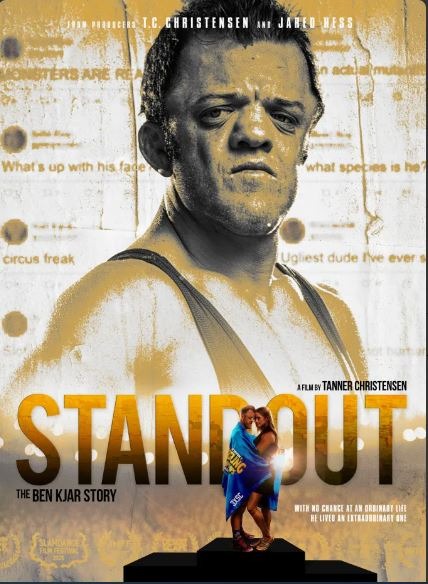
What if the very thing that sets us apart could become our greatest source of strength? Standout: The Ben Kjar Story explores this question through a moving portrait of courage, perseverance, and the transformative power of kindness. Inspiring and deeply human, the film challenges us to rethink how we define success, confront adversity, and treat those who are different from us.
At the heart of the film is Utah based Ben Kjar, who faced several challenges due to Crouzon syndrome but defied conventional ideas of success and acceptance. While wrestling provides the backdrop, the story reaches far beyond sport, underlining the extraordinary power of choosing kindness in the face of cruelty.
For writer and director Tanner Christensen, bringing Ben’s story to the screen became a journey of discovery, empathy, and personal growth. In this exclusive conversation with Aishveryaa Nidhi, Christensen reflects on what drew him to Ben’s story, the responsibility of portraying a real-life journey authentically, and how the experience transformed him both as a filmmaker and as a person.
Ultimately, ‘Standout’ is about having the courage to be yourself, the resilience to keep moving forward, and the generosity to meet others with kindness. We may not be able to choose every challenge life brings us, but we can choose how we respond to it.

Excerpts from the interview
Aishveryaa Nidhi: What was it about Ben Kjar’s story that first made you feel this was a story that needed to be told?
Tanner Christensen: I knew of Ben since I was a kid. He grew up in front of me. I watched him accomplish great things in junior high and high school. But I didn’t know his whole story when we got started. However, I knew enough to realize that if someone could accomplish what he did while dealing with his obvious differences, it was probably an amazing story to be told.
I know I’ve felt different in my own life. I think everyone is different in some way or another. What better way to show the world that being different is okay than through Ben’s story?
Your personal connection to feeling different makes this story meaningful, allowing it to transcend the wrestling mat and explore the universal desire for acceptance. When did you realize this was more than a sports story—a story of resilience and the human spirit?
Christensen: From the very beginning, I knew this was more than a sports story. If it had been just a sports story, I don’t think I would have been interested in making it. Wrestling was the vehicle for telling Ben’s story, but what interested me most was everything else he went through, experienced, and learned along the way.
How did you approach Ben’s story while remaining true to his experience?
Christensen: We interviewed more than 55 people while making this film to ensure we captured a full perspective of Ben’s story. Of course, most of those interviews didn’t make it into the film, but they were critical steps in helping me understand what Ben went through.
We also invited family members and friends to watch rough cuts of the film early in the process. They helped us identify our blind spots as filmmakers and discover new ideas to tell Ben’s story as effectively as possible.
This commitment to listening and learning is essential to telling a story authentically, ensuring Ben’s experiences are portrayed with sensitivity and depth.

What was the biggest challenge you faced as a writer and director while making this film?
Christensen: We spent months trying to find an actor to play a young Ben. While we expected that to be challenging, I had no idea it would be nearly impossible.
I wanted to cast an actor who had Crouzon syndrome, just like Ben. I didn’t want to fake it with visual effects, makeup, or other camera tricks. But there aren’t many children with Crouzon syndrome, and even fewer fit the character’s other physical characteristics.
The search was exhausting, and we had nearly given up just before filming was set to start. But luckily, Ben had a chance encounter with a family that had a boy with Crouzon syndrome just weeks before filming. He was perfect for the role, so we cast him, and he did an amazing job.
Perhaps one of the most affecting aspects of Ben’s journey is not simply what he has achieved, but how he responds to the world around him. In an age when online cruelty can be relentless, his response offers a powerful alternative to anger and retaliation.
Was there a particular moment during the making of the film that affected you personally or changed your perspective about Ben?
Christensen: Seeing how awfully some people reacted to Ben’s facial difference on his social media, and then watching him disarm his critics with love and kindness, was incredibly impactful. What is most incredible is that it continues to happen every day.
You can see it happening on the film’s or Ben’s social media pages. I am deeply disturbed every time one of those comments appears, but I am always inspired by the kindness with which Ben responds.
There is something deeply moving about that. Choosing kindness in the face of cruelty requires extraordinary strength. Ben’s response challenges us to reconsider not only how we treat others but also what it means to be courageous.
Your storytelling is human and intimate. What did you hope the audience would take away from the film?
Christensen: I hope that viewers leave the film with a renewed sense of resilience and purpose. Ben’s journey to embrace his unique identity reminds us that our greatest challenges can become our greatest strengths. I want audiences to feel empowered to stand out, celebrate their individuality, and recognize their ability to inspire others, regardless of the obstacles they face.
Did making this film change you in any way, as a filmmaker or as a person?
Christensen: It has made me kinder and more empathetic. It has also made me more willing to chase my goals and accomplishments. In other words, it has made me want to be like Ben.

What do you hope Ben’s story will teach those facing challenges of their own?
Christensen: Everyone faces challenges in life. It is inevitable. We have since learned that many of the people who were unkind to Ben were facing terrible challenges of their own.
I think Ben’s story offers valuable perspective on how to deal with our challenges and help others through theirs. When we face darkness, whether from outside or within, responding with kindness and love toward others and ourselves is the best way to deal with tough times.
Ben is an incredible example of this, and I hope his story helps each viewer recognize the virtue of living this way.
A story that stays with you
What stays with me about Standout: The Ben Kjar Story is its reminder that we never truly know what another person is experiencing. We often judge what makes someone different, overlooking the courage, vulnerability, and determination behind that difference.
Ben’s story encourages us to look beyond appearances, face adversity with resilience, and recognize that kindness is not a sign of weakness but an expression of strength. It also reminds us that our greatest influence on others may come not from our achievements alone, but from how we treat others along the way.

Leave a Reply