


Every year, thousands of young people step out of the familiar world of school and enter the vast, unpredictable world of higher education. Some walk in with confidence, some with curiosity, and many with quiet fear hidden behind their smiles. As educators, parents, and mentors, we stand at this important doorway with them. And yet, the question keeps returning to us: Are our children truly ready?
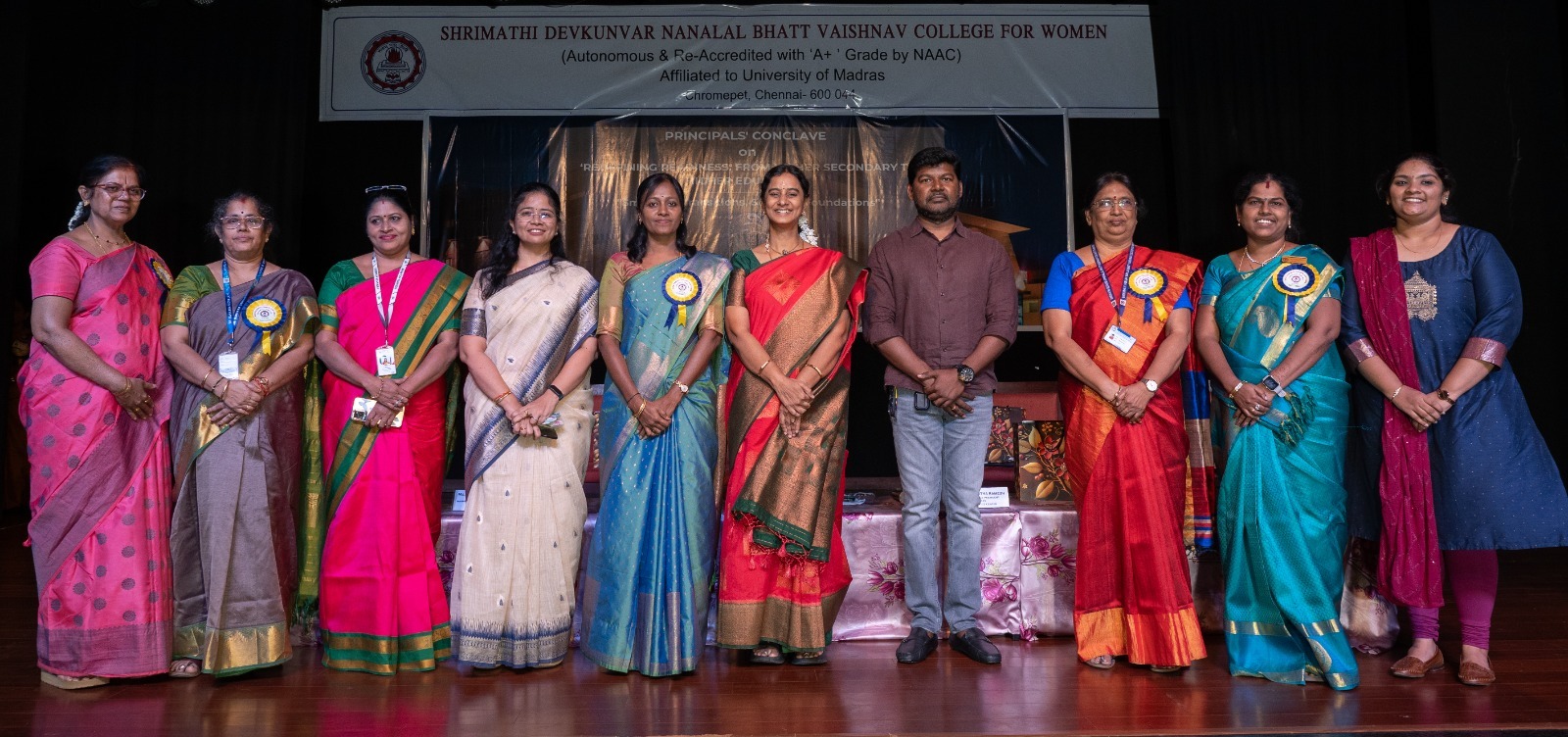
This question was at the heart of a recent panel discussion that I was part of, organized by the decades-old SDNB Vaishnav College for Women in Chennai on the theme, “Redefining Readiness: From Higher Secondary to Higher Education.”
It brought together school principals, educators, psychologists, and industry experts — each holding a different piece of this big, beautiful, complicated puzzle called “student readiness.”
As moderator when I listened to these voices, one thing became clear: Readiness is not a single dimension. It is a journey. A preparation of the mind, the heart, and the spirit.
More than marks: The academic shift
For years, we have measured a student’s future by their marks. Board exam results have become badges of honor, or at times, silent burdens. But the transition to college tells a different story.
College educators shared how students who topped their exams often struggle in their first year — not due to lack of intelligence, but because the rules suddenly change. Memorizing lessons is no longer enough. College demands critical thinking, research, exploration, and independence.
School principals agreed that the foundation must shift from textbook learning to curiosity-driven learning. The goal is no longer just to “complete the syllabus,” but to cultivate the courage to ask questions, challenge ideas, and think creatively.
The emotional journey: A silent transition
But academics are only one part of readiness. The deeper challenge often lies in a place we rarely measure: the heart.
Psychologists on the panel offered a powerful insight: Students entering college face anxiety, loneliness, identity confusion, and pressure to “become something” even before they understand who they are. Until yesterday, they were protected by school routines, teachers who closely guided them, and parents who held them. Suddenly, they are expected to be adults overnight.
One psychologist said something that stayed with me long after the discussion ended: “Emotional readiness is not a skill. It is a culture we build around our children.”
Schools and families both play a role — by listening more, judging less, and allowing children to fail safely. Counseling and wellness programs are not luxuries anymore; they are necessities.

Skills for tomorrow: Beyond academics
Industry experts added another powerful lens: the future.
Our students are entering a world where job roles change faster than textbooks. Creativity, problem solving, critical thinking, resilience, digital literacy, soft skills, and adaptability — these are becoming as important as academic knowledge.
One expert put it beautifully: “A student who can solve problems, handle change, and manage emotions will always be more ready than a student who only knows formulas.”
Readiness, therefore, must include these life skills:
Teamwork/Interpersonal Skills: The ability to work with people.
Time Management: The discipline to manage time.
Communication Skills: The confidence to speak.
Perseverance: The courage to try.
Curiosity/Upskilling: The willingness to learn continuously.
A collective responsibility
What touched me most during the conversation was the realization that readiness cannot be built by one group alone.
- Schools cannot prepare students alone.
- Colleges cannot fix everything in the first semester.
- Parents cannot carry the entire emotional load.
- Industry cannot wait for perfectly polished graduates.
True readiness happens when all of us work together.
When we move from competition to collaboration. When we stop asking, “Is the student ready?” and start asking, “What can we do to help them be ready?”
A vision aligned with India’s educational future
The National Education Policy (NEP 2020) encourages exactly this: a holistic, flexible, multidisciplinary education system where learning is not confined to exams, and readiness is not measured in percentages.
And perhaps that is the promise we must carry forward — to build an education system that prepares young people not just for college, but for life.
A closing reflection
As the discussion ended, I looked at the panelists, the educators, and the students in the hall. And I felt a gentle truth rising within me:
Readiness is not a destination. It is a journey. A journey we must walk together — with patience, empathy, and vision. For when our students step into the world, they carry not just their marks, but also our collective hopes, guidance, and belief in them.
And that is what truly prepares students for the path ahead.


Leave a Reply