


Parenting is perhaps one of the most profound mirrors of our own growth. We enter it thinking we are the teachers and slowly realise that our children, in their innocent honesty, become our greatest guides.
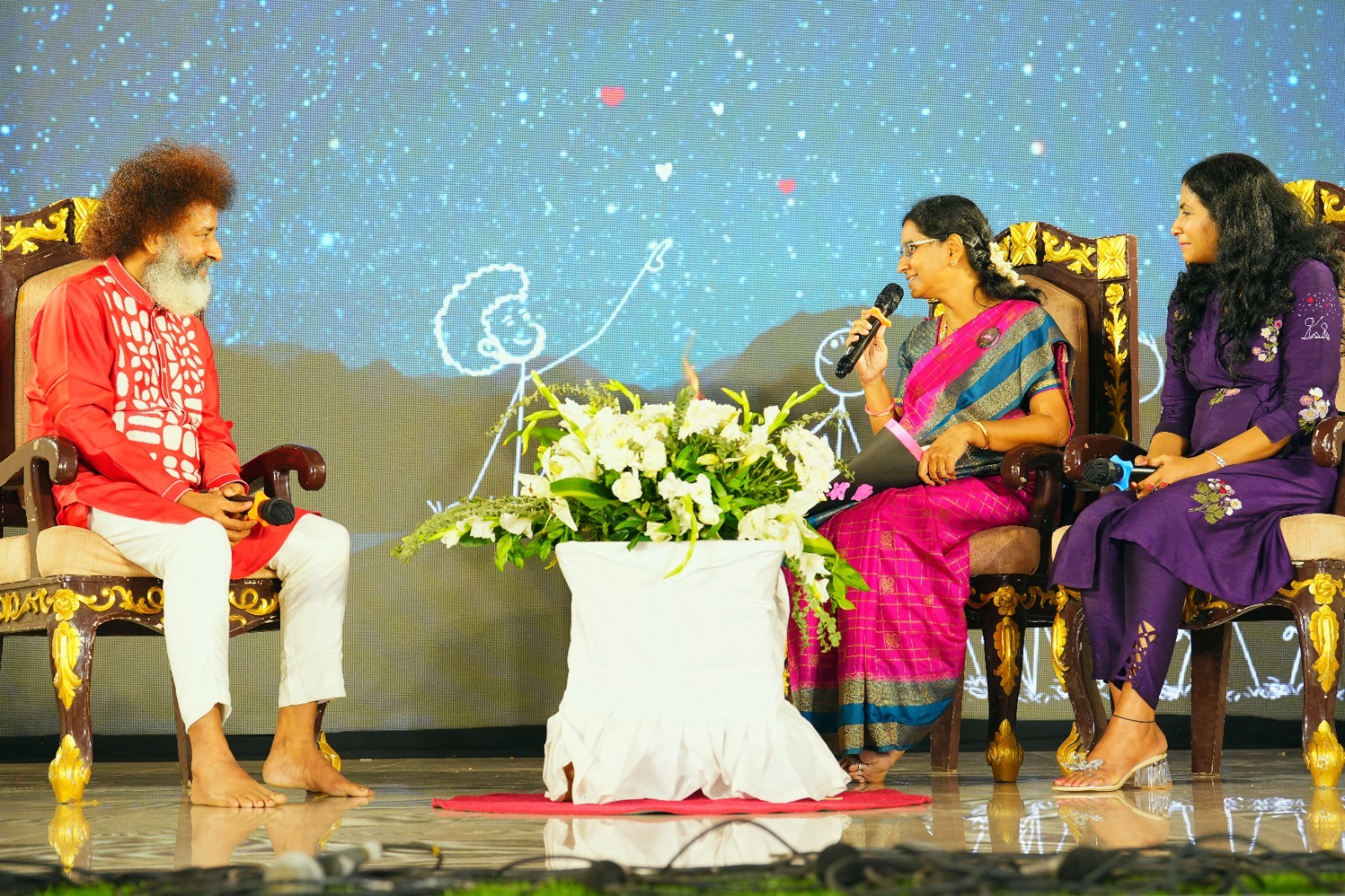
Recently, during the book launch of the book Love, Multiplied (111 Times), by my beloved teacher, Mahatria Ra, at our school campus in Chennai, thanks to my friend and bestselling author Megha Bajaj, I had the privilege of asking him a question that has been in the hearts of many parents:
Where is the line between parenting and pampering? And even when we know we must say “no,” how do we say it with love?
His response was so profound that it has lingered with me, resonating in every small interaction I observe between parents and children.
The Thin Line We Often Miss
There truly is a very thin line between parenting and pampering, and most of us cross it without even realizing it. Not because we don’t love our children, but because we love them too much and fear hurting them.
Many parents tell me privately:
- “I know he is wrong… but if I correct him, he won’t talk to me.”
- “If I say no, she will cry… and I don’t want to upset her.”
- “Let me give him what he wants… he will grow out of it anyway.”
It stems from affection, but also from fear: fear of conflict, fear of misunderstanding, and fear that our child will feel unloved.
What Mahatria said was simple yet eye-opening:
We often know when our children go astray. The challenge is guiding them without diminishing their spirit.
The challenge is guiding children without diminishing their spirit. We must correct the behaviour, not the child. There is a world of difference between saying, “You are careless”, and “This choice was careless.”
Correcting Actions, Not the Child
He emphasized that we must correct the behaviour, not the child.
There is a world of difference between saying:
- “You are careless.”
and - “This choice was careless.”
One attacks their identity. The other corrects their action.
A simple shift in a parent’s language can profoundly impact a child’s self-esteem.
A five-year-old who breaks a toy and hears, “You always do this!” learns shame. But if the parent kneels down and says, “It broke because you threw it. Shall we try to take care next time?”, the child learns responsibility instead of guilt.
Why Time Is the Greatest Form of Parenting
One of the deeper realizations I had listening to Mahatria was this:
Children misbehave, lie, hide, or steal not because they are bad, but because they do not feel safe enough to be honest.
And the safety comes from something very simple: time.
When parents invest time:
- Children talk
- Children trust
- Children open up
- Children share their mistakes instead of hiding them
- Children develop a natural inner confidence
A child who receives 10 minutes of real, undistracted attention every day grows to know, “I matter.”
A child who rarely gets time begins to think, “If I tell the truth, I may get scolded… but if I lie, nobody will know.”
Time is not about hours. It is about presence. It is about listening. It is about staying emotionally available.

The Trap of Pampering
Mahatria gently cautions that, though it feels like love, pampering often robs the child of the chance to grow.
A 6-year-old who is always rescued from trouble never learns responsibility.
A 12-year-old who has their mess cleaned up all the time never learns discipline.
A 16-year-old whose problems are solved by parents never learns resilience.
Pampering often stems from the fear of seeing our child struggle – but ironically, our fear can become their weakness.
Parenting as Spiritual Growth
Mahatria shared something that struck me deeply:
Parenting is not just about raising a child; it is about raising ourselves. Children push our buttons, trigger our unhealed parts, and challenge our patience.
A parent who pauses to reflect, rather than reacting, grows spiritually through the process.
Imagine a 12-year-old who argues every day. Instead of shouting back, what if the parent silently asks: “Why does this upset me so much? What fear of mine is getting activated?”
When we understand ourselves, we can guide our children more effectively.
Love Is Not Enough – Acceptance Is
Children do not grow with love alone. They grow with unconditional acceptance.
A 4-year-old refusing to eat vegetables does not need scolding – he needs understanding.
A 14-year-old wanting a creative career needs faith more than fear.
A 10-year-old who scores low marks needs reassurance, not comparison.
Acceptance says: “Even when you fail, you belong.”
This is the foundation of confidence. This is what makes a child honest instead of hiding mistakes.
Parenting is not just about raising a child; it is about raising ourselves. Children push our buttons, trigger our unhealed parts, and challenge our patience.
Practical Moments Every Parent Will Recognize
- Ages 4–6: A tantrum over a toy is an opportunity to teach boundaries with gentleness.
- Ages 7–10: A lie about homework is an opening to understand their struggle, not an excuse to shame.
- Ages 11–13: A risky friend or new behaviour is a chance to build trust and deeper conversations.
- Ages 14–16: Their choices may scare us – but our belief in them becomes their courage.
The Heart of Conscious Parenting
Ultimately, Mahatria’s message is clear: Parenting is not about control. It is about connection.
Children do not need perfect parents. They need those who are present. They need parents who correct with love, listen with patience, and guide with acceptance.
When we invest time and presence, we shape not just the child’s future, but their inner world.
Confidence, honesty, courage, and kindness blossom naturally in a child who feels deeply, consistently, and unconditionally loved.That, perhaps, is the greatest gift a parent can give.
Here is the YouTube link of Mahatria commenting on Parenting Vs. Pampering:


Leave a Reply to Ramya Kamal Cancel reply