


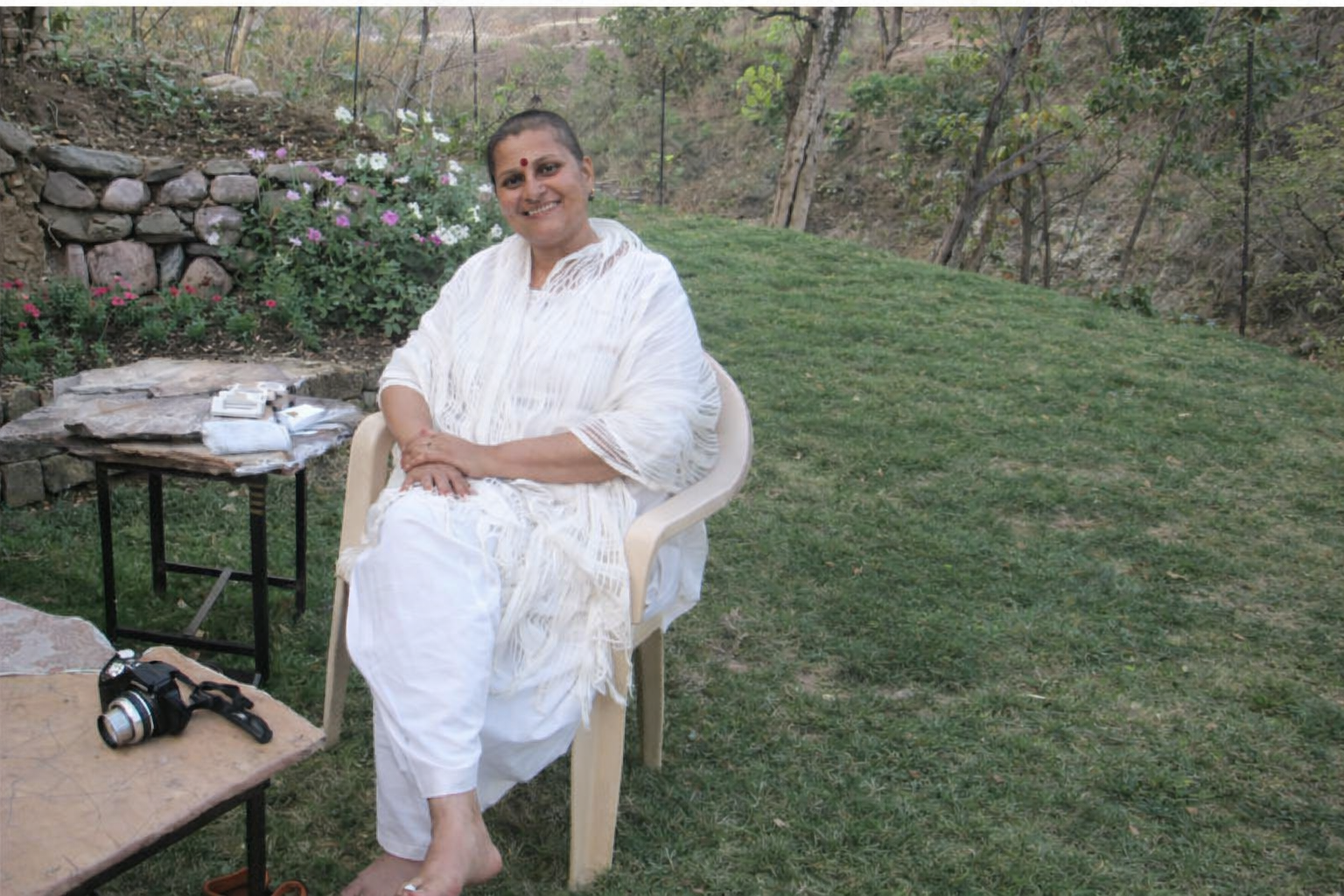
In many modern yoga traditions, Kundalini is described as the awakening of a dormant energy coiled at the base of the spine, with workshops and retreats promising techniques to activate this power. Maa Gyaan offers a markedly different perspective. For her, Kundalini is not the goal of spiritual practice; self-realization is. In the lineage she follows, spiritual growth unfolds through the balanced integration of Bhakti Yoga, Jnana Yoga, and Karma Yoga. Through devotion, wisdom, and right action, the inner system gradually purifies itself. As the mind becomes clearer and the intellect more refined, the energy system reorganizes naturally. Kundalini then rises not through force or spectacle, but as a quiet and organic consequence of inner alignment.
In an era where Kundalini awakening is often portrayed as a dramatic spiritual breakthrough, Maa Gyaan’s teachings offer a radically different understanding. Rooted in the Bhakti Marga of Mahaganapati sadhana, her work emphasises gradual transformation rather than energetic spectacle. Daily japa, meditation, scriptural reflection, and disciplined living slowly dissolve psychological burdens and the deeper conditioning carried within the subconscious. In yogic language, these knots—granthis—loosen through devotion and knowledge. Her own journey as a woman teacher in a traditionally male domain reflects the same inner process: over time, she says, the identity of the sadhak replaces that of gender.
In the following conversation with Raji Menon Prakash, Director, Conscious Content at alotusinthemud.com, Maa Gyaan reflects on spiritual authority, the evolving role of women in yoga traditions, and why authentic Kundalini awakening unfolds quietly — as a natural consequence of inner purification.
Raji Menon Prakash: Kundalini Yoga speaks of awakening inner Shakti, yet spiritual authority has historically been male-dominated. As a woman teacher, how have you navigated embodying Shakti while moving through patriarchal structures within spiritual spaces?
Maa Gyaan: Yes, this is a very realistic question. Looking back over the past thirty years of my journey, the patriarchal structure has definitely been a challenge — especially in Indian society.
As a younger woman teacher, it was difficult because people did not take me seriously. In spiritual gatherings, particularly in the sadhu samaj, you could feel the judgmental approach. Male teachers were not always appreciative of women teachers.
I have always been a shy person and have avoided confrontations. My work has been mostly with my students, and I feel very comfortable with them because there is trust and acceptance. Over time, something changed within me. Until about the age of 45, I was conscious of being a woman teacher. After that, I became clear about my genderless presence as a spiritual guide.
Today, people approach me not as a female guru but simply as a teacher. As we say in the spiritual traditions, as is the micro, so is the macro. When the inner conditioning dissolves, the outer environment changes as well.
Earlier, even in the village where I live, there was hesitation in accepting a woman swami. Today, that resistance has largely disappeared.
Kundalini is not the destination — it is simply a side effect of transformation. – Maa Gyaan
Kundalini is often described as an energetic ascent. As a woman, has your lived experience of the body shaped how you understand and teach this energy?
Maa Gyaan: In the classical Ashtanga path, the sequence is Yama, Niyama, Asana, Pranayama, Pratyahara, Dharana, Dhyana, and Samadhi. On our path, the emphasis is slightly different. Asana practice is minimal — only enough to support meditation. Pranayama and mantra japa are more central.
Our dharana is centered on Mahaganapati, first through form or yantra and later through meditation on the formless absolute. A major emphasis is placed on Jnana Yoga, which helps a practitioner live in a kind of genderless awareness. When the identity of the sadhak comes to the forefront, bodily processes such as menstruation or aging do not become obstacles. The body strengthens and cooperates with practice.
In our tradition, menstruation is not considered a limitation. Unless someone is physically unwell, there is no reason to stop meditation or mantra practice. Ultimately, Kundalini should not be pursued directly. When the mind and intellect are purified through devotion and knowledge, Kundalini rises naturally.

Many women spiritual teachers are expected to be nurturing or self-effacing. Have there been moments when you had to consciously claim authority?
Maa Gyaan: Not really. Spiritual practice teaches us sakshi bhav — the witnessing attitude. When someone does not give you respect, it is usually the ego that reacts. Personally, I keep a very low profile. I interact mostly with my students and avoid situations where people compete for recognition.
If I had to constantly assert my authority, it would feel artificial to me. The nurturing aspect comes naturally, and I am comfortable with it because it keeps me grounded on my path.
Kundalini awakening can sometimes be destabilizing. How do you distinguish spiritual transformation from unresolved psychological trauma?
Maa Gyaan: That is exactly why we do not pursue Kundalini as a goal. The goal is self-realization and holistic healing of the mind, intellect, and subconscious layers. When people chase Kundalini experiences without addressing inner psychological patterns, instability can occur.
Our path integrates Bhakti Yoga, Jnana Yoga, and Karma Yoga. Bhakti provides protection, Jnana brings patience and clarity, and Karma Yoga develops surrender. When these are integrated, the awakening happens organically.
Can spiritual transmission happen through online platforms?
Maa Gyaan: This question became very relevant during the COVID years. We discovered that energetic transmission can indeed happen through online interaction. However, personal interaction and trust between teacher and student are still essential.
I always encourage students to meet in person before committing to long-term practice. Once that connection is established, guidance can continue online.
Looking back, what has been the personal cost — and the unexpected grace — of walking this path?
Maa Gyaan: There has been no cost. When I look at my life, I see only grace — grace overflowing. Many things in life cannot be planned. When grace supports you, the right steps unfold naturally.
In Hindi, we say Kripa Sadhya, not Karma Sadhya. It is achieved through grace, not through personal effort alone. When the sense of doership disappears, life itself becomes an expression of grace.


Leave a Reply