


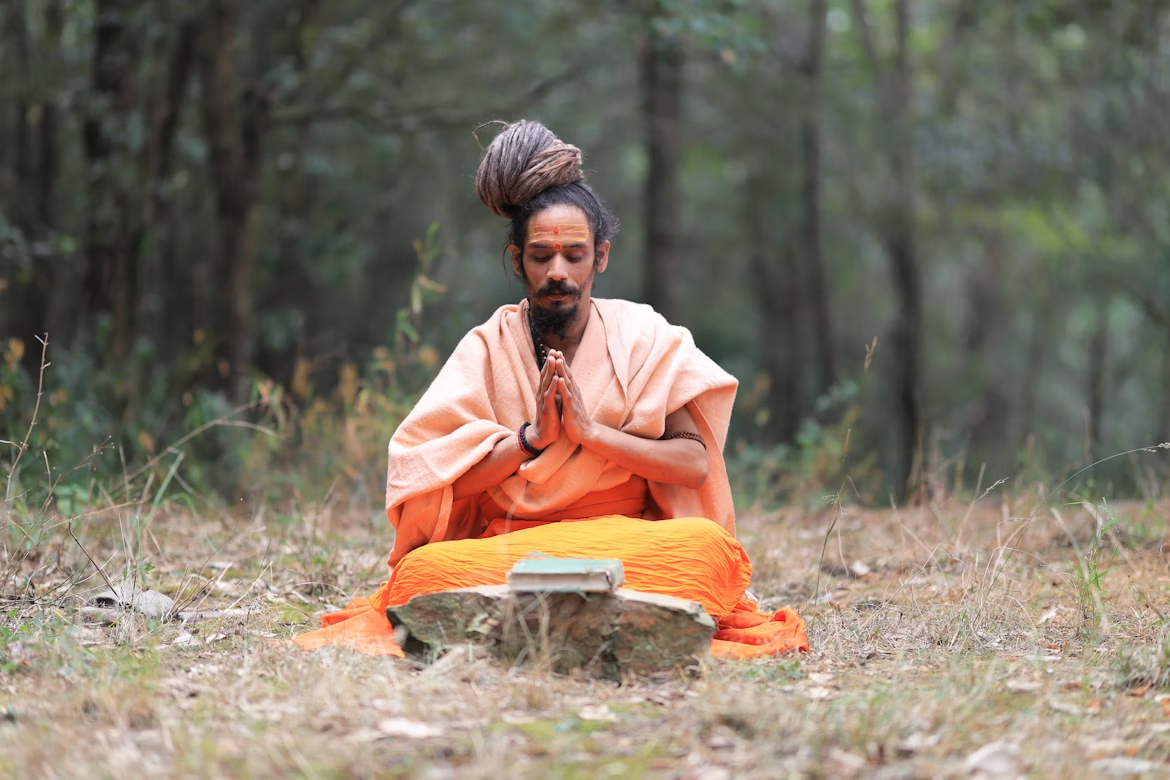
We say ‘thank you’ so often that it can feel like a social reflex—a polite punctuation mark to end a transaction or conversation. A waiter refills your cup—‘thank you’.Someone holds the door open—‘thanks’. Words exchanged, box ticked. But beneath that everyday courtesy lies something far more profound—a sacred art that can awaken our spirit, soften our ego, and reconnect us with the living pulse of existence itself.
In a world that rushes forward, barely pausing to breathe, gratitude has become an endangered emotion. Yet, across traditions—from the Indian ‘dhanyawad’ to the Buddhist ‘mudita’, from Native American prayers of thanksgiving to Stoic reflections on the fleeting beauty of life—gratitude has always been viewed as more than mere good manners. It is a way of being. A spiritual practice. A daily return to humility and presence.
This is an invitation to rediscover the sacred art of saying ‘thank you’—not just with your lips, but with your life. As the calendar turns toward the American Thanksgiving holiday, we are offered a national moment to pause, yet the true depth of this practice requires much more than a single feast. It requires a constant, conscious effort.
The Gratitude that Grounds Us in Humility
In Sanskrit, dhanyawad comes from dhanya, meaning blessed or fortunate. To say dhanyawad is to acknowledge the grace that flows through your life—not because you earned it, but because it was given. It is an expression soaked in profound humility.
When I whisper dhanyawad in my morning quiet—to the air that fills my lungs, to the sun rising faithfully, to the body that still carries me—I am reminded that nothing in this life is owed. Every moment is prasad—a sacred offering. The breath, the light, the beating of the heart—these are unearned gifts that form the foundation of our existence.
In the Indian tradition, gratitude is not something to be reserved for grand gestures or once-a-year celebrations such as Thanksgiving. It is woven into the rhythm of daily life: before a meal, after a bath, upon seeing the dawn. Farmers bow to the soil before planting seeds. Artists touch their instruments to their foreheads before beginning to play. Children touch their elders’ feet, seeking blessings and showing reverence. Each act says, without words, “I remember I am not alone in my becoming.” I am supported by the vast, interconnected web of life.
True gratitude, then, is not transactional—it is transformational. It is not “I thank you because you did something for me,” but “I thank you because I see the divine in what is.” This practice of recognizing the sacred in the mundane shifts our entire outlook from one of demand to one of reverence. It is the beginning of the awakened life, the realization that our well-being is intrinsically linked to forces greater than our individual will. This grounding in dhanyawad prepares the heart for a deeper form of thanks.
At times our own light goes out and is rekindled by a spark from another person. Each of us has cause to think with deep gratitude of those who have lighted the flame within us.
– Albert Schweitzer
The Joy of Others’ Joy and the Antidote to Envy
If dhanyawad is gratitude for what we receive, mudita, a core concept in Buddhist philosophy, is gratitude for what others receive.
Often translated as “sympathetic joy,” mudita is the spiritual opposite of envy and schadenfreude. It is the spontaneous, genuine delight that arises when we witness another’s happiness and wish them well without reservation. Imagine watching a friend succeed, a stranger smile, a bird soar—and instead of comparison or a feeling of lack, your heart expands in pure joy. That expansion is mudita.
The Buddha called it one of the “four immeasurables”—boundless states of being that purify the mind and expand the heart. Practicing mudita is, in essence, saying ‘thank you’ for the joy that exists in the world, whether or not it belongs to you.
In our modern age of curated perfection, social media comparison, and quiet competition, Mudita is a truly radical spiritual practice. It turns the lens outward, inviting us to see abundance rather than scarcity, connection rather than separation. When we cultivate Mudita, we loosen the grip of the ego that insists on personal achievement and step into the shared field of life’s blessings—a place where one person’s happiness adds light to the whole. To say “thank you” for another’s joy is to affirm that joy is universal, not private property. It allows us to participate in the blessing even if we are not the direct recipient.

The Daily Practice of Aligning the Heart
Gratitude is not an emotion that simply visits us on lucky days; it is a practice—one that can be honed like prayer, meditation, or breathwork. Every tradition offers a way of training the heart to recognize grace.
In Native American wisdom, the day often begins not with demands but with thanks. The Haudenosaunee (Iroquois) people recite the ‘Thanksgiving Address’ (Ohen:ton Karihwatehkwen), a long, beautiful prayer giving thanks to everything—from the water to the wind, the plants, the animals, the stars, and the Great Spirit that holds them all. This is a conscious realignment. Each word of thanks turns the mind from taking to receiving, from control to communion. It is a recognition of dependency and an honoring of life’s cycles.
This resonates deeply with the spirit of the Western holiday of Thanksgiving, which has its roots in giving thanks for the harvest and communal survival. The modern practice, however, often requires us to reclaim the profound spiritual core of the word—to make giving thanks a daily state of being rather than a yearly event.
You might begin your own dhanyawad sadhana simply by noticing. Each morning, place your hand on your heart and name three things you are grateful for. Not just the obvious blessings—but the subtle ones: the silence between sounds, the warmth of your cup, the resilience of your own breath, the fact that your car started this morning.
Gratitude shifts perception. What we focus on expands. The more we practice thankfulness, the more reasons we find to be thankful for. This simple act rewires the brain, making happiness and contentment more accessible. It dissolves the illusion that we must achieve happiness and replaces it with the realization that we can simply receive it by being awake to what is already present.
The Soil from which Gratitude Grows
At its core, gratitude is humility in motion.
Humility (vinamrata) does not mean self-deprecation or servility; it means knowing your place in the great web of life—and recognizing that everything is interconnected. When we bow our heads in thanks, we acknowledge that we are not the sole architects of our fate. We are participants in a cosmic choreography—guided, supported, and shaped by countless visible and invisible hands.
This awareness dissolves arrogance and softens the heart. A truly humble person is grateful because they see clearly—they see how much of what sustains them comes from others: the food grown by the farmer, the water flowing through ancient pipes and aquifers, the words written by ancestors, and the sunlight filtering through leaves. They understand that their success is a communal effort.
Humility, then, is the soil from which genuine gratitude grows. Without it, “thank you” becomes hollow—a social script instead of a spiritual song. When we shed the burden of having to be entirely self-made, we open ourselves to the grace that flows freely from the universe and our community. This radical interdependence is the ultimate teaching of both Dhanyawad and the Native American Thanksgiving Address.
Gratitude as Presence and Alchemy
The deepest gratitude is not a list of blessings; it is a state of awareness—a quality of presence.
When we are fully present, we cannot help but feel thankful. Presence magnifies the ordinary until it glows with wonder. The moment we slow down enough to really see—the colors of dusk, the kindness in a stranger’s eyes, the rhythm of our own breath—gratitude arises naturally, without effort.
As Buddhist teacher Thich Nhat Hanh once said, “When you are grateful, you are happy.” Gratitude is not merely the result of happiness; it is the seed of it.
Furthermore, gratitude doesn’t deny pain; it offers perspective and alchemy. As the teacher Jack Kornfield puts it, “Gratitude does not transform pain into pleasure, but it transforms pain into meaning.”
Try this: the next time you face difficulty, instead of resisting it, whisper “Dhanyawad.” Thank the challenge for the resilience it forces you to build. Thank the heartbreak for the compassion it births. Thank the delay for the patience it stretches within you. This is not passive denial—it’s spiritual alchemy. Gratitude turns the ordinary, and even the difficult, into sacred teachers. It allows us to receive the full spectrum of life, recognizing the profound lessons embedded in struggle.
Thank You as a Prayer and a Communal Link
Across the world’s wisdom traditions, the conscious act of giving thanks is the highest form of prayer.
Native Americans often say, “We do not pray for rain; we give thanks for rain.” This subtle shift from asking to appreciating changes everything. Gratitude doesn’t beg—it trusts. It doesn’t demand—it receives. It recognizes that the world is inherently generous.
In the Bhagavad Gita, Krishna tells Arjuna that the wise one sees Ishvara—the divine—in every act of life. Eating, breathing, working, resting—all can be offerings of gratitude. When you move through your day with that awareness, every thank you becomes sacred speech.
The words may be small, but their vibration carries profound power. Saying “thank you” consciously can change the texture of your interactions. It can heal relationships, soothe misunderstandings, and invite lightness into heavy moments.
Imagine a world, not just on Thanksgiving, but every day, where ‘thank you’ was not just courtesy but communion. Where we looked each other in the eye and truly meant it. Where gratitude wasn’t a performance but a shared presence. This is the ripple effect of the sacred art of saying thank you. It transforms not just the individual, but the entire collective field. When we live in Dhanyawad and practice Mudita with humility, we create harmony within ourselves and with the world.
To practice gratitude is to bow before life itself—in humility, in joy, in awareness. Dhanyawad teaches us to see blessings in the everyday. Mudita teaches us to celebrate others’ joy. Native wisdom teaches us to give thanks before we ask. And altogether, they remind us: saying “thank you” is not a reaction—it’s a way of being awake.So today, before you rush into the noise of doing, pause. Place your hand on your heart. Breathe. Softly whisper dhanyawad: to life, to love, to the unseen. Because gratitude is not the end of the journey. It is the path itself.

Leave a Reply